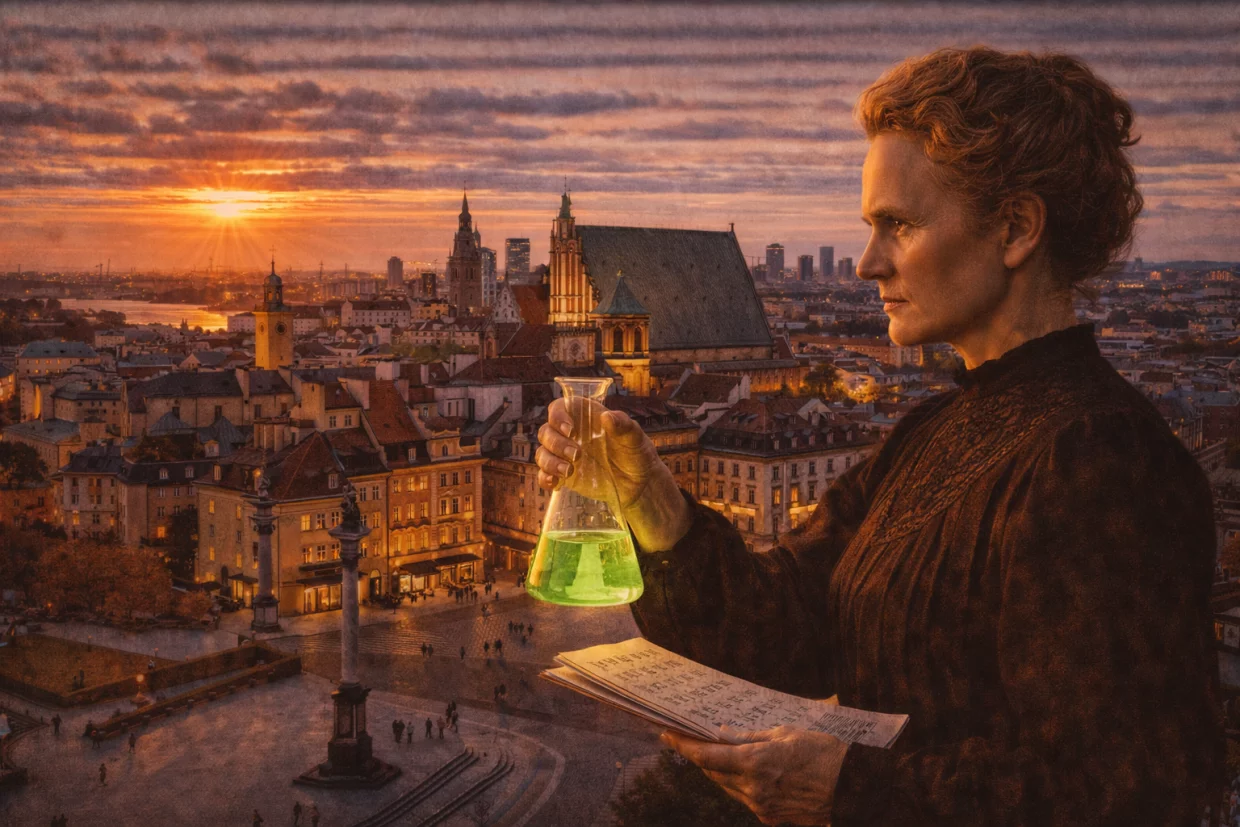
Location & Historical Background
Romantic Setting
Warsaw stretches along the Vistula River in central Poland, where broad boulevards, green parks, and modern districts meet historic neighborhoods. Today, visitors are struck by the city’s contrasts: reconstructed old streets stand beside bold modern towers, while riverbanks offer space to breathe amid urban intensity.
Origins & Foundation
Warsaw emerged as a settlement in the 13th century, gaining importance thanks to river trade and its central location. Legend claims the city was founded by a fisherman named Wars and a mermaid named Sawa—proof that Warsaw has always mixed practicality with myth. By 1596, it became the capital of Poland.
The Three Greatest Blows
The Swedish Deluge (1655–1658)
During the Swedish invasion known as the Deluge, Warsaw was occupied and heavily damaged between 1655 and 1658. Palaces were looted, the population suffered, and the city entered a long period of recovery.
World War II Destruction (1939–1945)
Warsaw endured near-total destruction during World War II. Following the Warsaw Uprising of 1944, Nazi forces systematically destroyed approximately 85% of the city. Civilian losses were catastrophic, making this one of Europe’s greatest urban tragedies.
Post-War Stalinist Reconstruction (1945–1956)
After 1945, Warsaw was rebuilt under Soviet influence. While the Old Town was painstakingly reconstructed, large districts were reshaped by socialist realism, permanently altering the city’s urban character.
The Golden Age
Warsaw’s golden age came in the 18th century, during the Polish Enlightenment. Under King Stanisław August Poniatowski, the city flourished culturally, producing palaces, theaters, and intellectual life that briefly rivaled Europe’s great capitals.
Why Visit the City Today
Today, Warsaw is dynamic, modern, and forward-looking. Its museums are world-class, its food scene ambitious, and its cultural life energetic. Visitors quickly realize that Warsaw isn’t about postcard perfection—it’s about stories, resilience, and momentum.
Tourist Information & Must-See Places
Practical Information (Estimated Averages)
- Average lunch: €8–13
- Average accommodation (per night): €90–150
- One beer: €2.50–4
- One coffee: €2.50–4
Most Interesting Parts of the City
Old Town (Stare Miasto), Royal Route, Śródmieście, Praga district, and the Vistula riverbanks.
Top 3 Must-See Attractions
Old Town (Stare Miasto)
Meticulously reconstructed after World War II, this UNESCO-listed area stands as a monument to collective memory and determination.
Royal Castle
Once home to Polish kings, rebuilt from ruins, and now a symbol of national continuity and resilience.
Warsaw Uprising Museum
A powerful, immersive museum telling the story of the 1944 uprising and the city’s fight for survival.
Final Summary
Warsaw doesn’t pretend nothing happened—it rebuilt anyway. Come for the history and modern energy, stay for the depth and honesty, and leave understanding that resilience can be a city’s most beautiful feature.
Tags: Poland • Scandinavia • Sweden