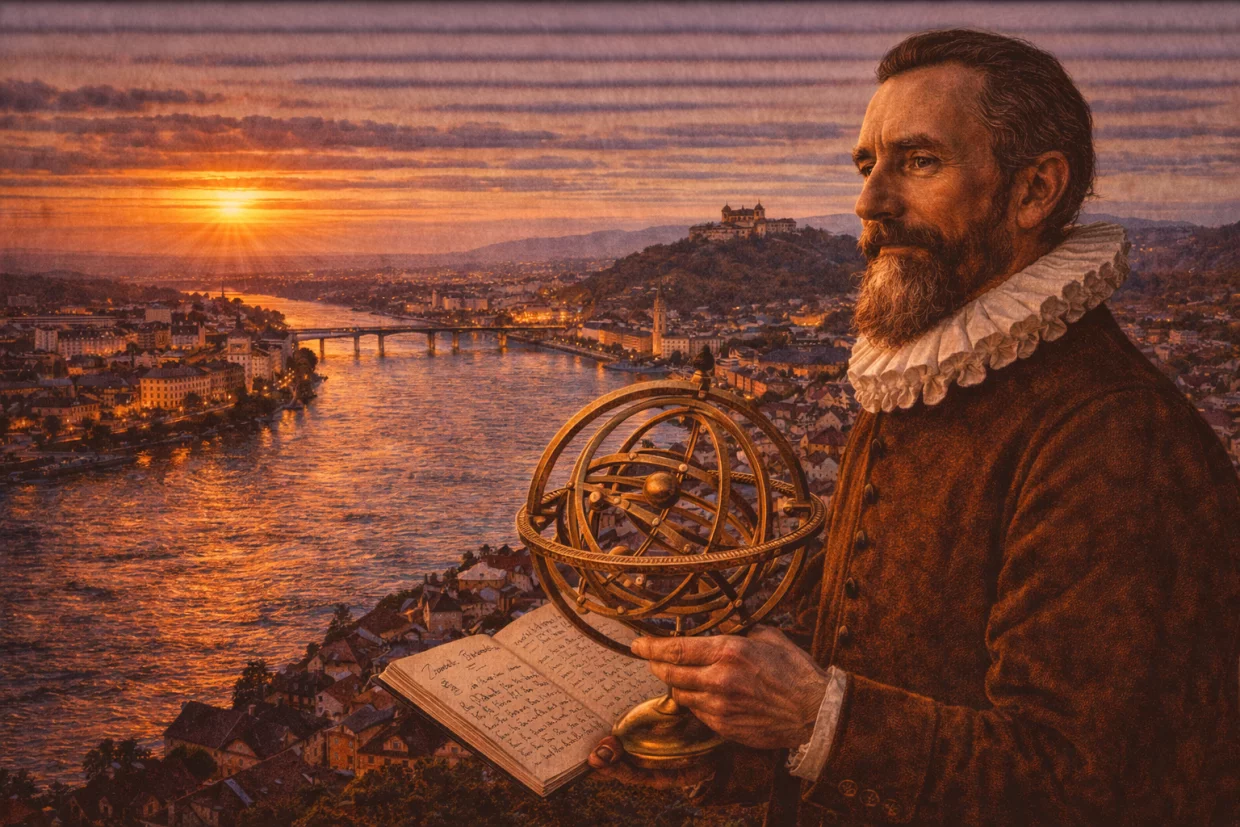
Location & Historical Background
Romantic Setting
Linz stretches along the Danube, where rolling hills of Upper Austria meet one of Europe’s great rivers. Vineyards, forested slopes, and river promenades soften the city’s industrial edges, while today’s visitors are surprised by how open, green, and visually striking the Danube skyline feels.
Origins & Foundation
Linz began as the Roman settlement Lentia, first mentioned around 25 BC, guarding an important crossing on the Danube frontier. Legend says Roman soldiers chose the spot because the river fog hid their hangovers and the hills protected them from barbarian drafts—military logic at its finest. Over centuries, Linz grew into a strategic trading town linking east and west.
The Three Greatest Blows
Fire and Plague of 1509
In 1509, a devastating fire swept through Linz, followed closely by outbreaks of plague. Wooden houses burned quickly, and population losses were severe, stalling development for decades and forcing major rebuilding.
Napoleonic Occupation (1805–1809)
During the Napoleonic Wars, Linz was occupied several times between 1805 and 1809. Trade collapsed, food shortages became common, and the city’s strategic importance made it a constant military target.
World War II Bombings (1944–1945)
As a major industrial center, Linz suffered heavy Allied bombings in 1944 and 1945. Large factory zones and residential districts were destroyed, and civilian casualties were significant. Post-war reconstruction reshaped the city’s modern character.
The Golden Age
Linz experienced its golden age in the late 19th and 20th centuries, driven by industrialization, steel production, and river trade. While factories powered economic growth, the late 20th century brought a second renaissance—this time cultural—turning Linz into a European hub for media art and innovation.
Why Visit the City Today
Today, Linz is bold, creative, and unexpectedly fun. It blends contemporary art, cutting-edge museums, lively riverbanks, and historic squares with ease. From digital festivals to traditional pastries, the city rewards curious travelers who enjoy places that evolve rather than pose.
Tourist Information & Must-See Places
Practical Information (Estimated Averages)
- Average lunch: €12–16
- Average accommodation (per night): €100–150
- One beer: €4–5
- One coffee: €3–4
Most Interesting Parts of the City
Old Town, Hauptplatz, Danube riverbanks, Urfahr district, and the Pöstlingberg area.
Top 3 Must-See Attractions
Ars Electronica Center
A futuristic landmark celebrating technology, digital art, and society. Interactive exhibitions make it one of Europe’s most innovative museums.
Pöstlingberg
A hill overlooking Linz, accessible by one of the world’s steepest adhesion railways, offering panoramic views and a charming pilgrimage basilica.
Hauptplatz and Old Town
One of Austria’s largest town squares, surrounded by historic buildings, cafés, and narrow streets that reveal Linz’s medieval core.
Final Summary
Linz doesn’t polish its edges—it uses them creatively. Come for the Danube views, stay for the ideas, and leave with a new respect for cities that dare to change.
Tags: Austria