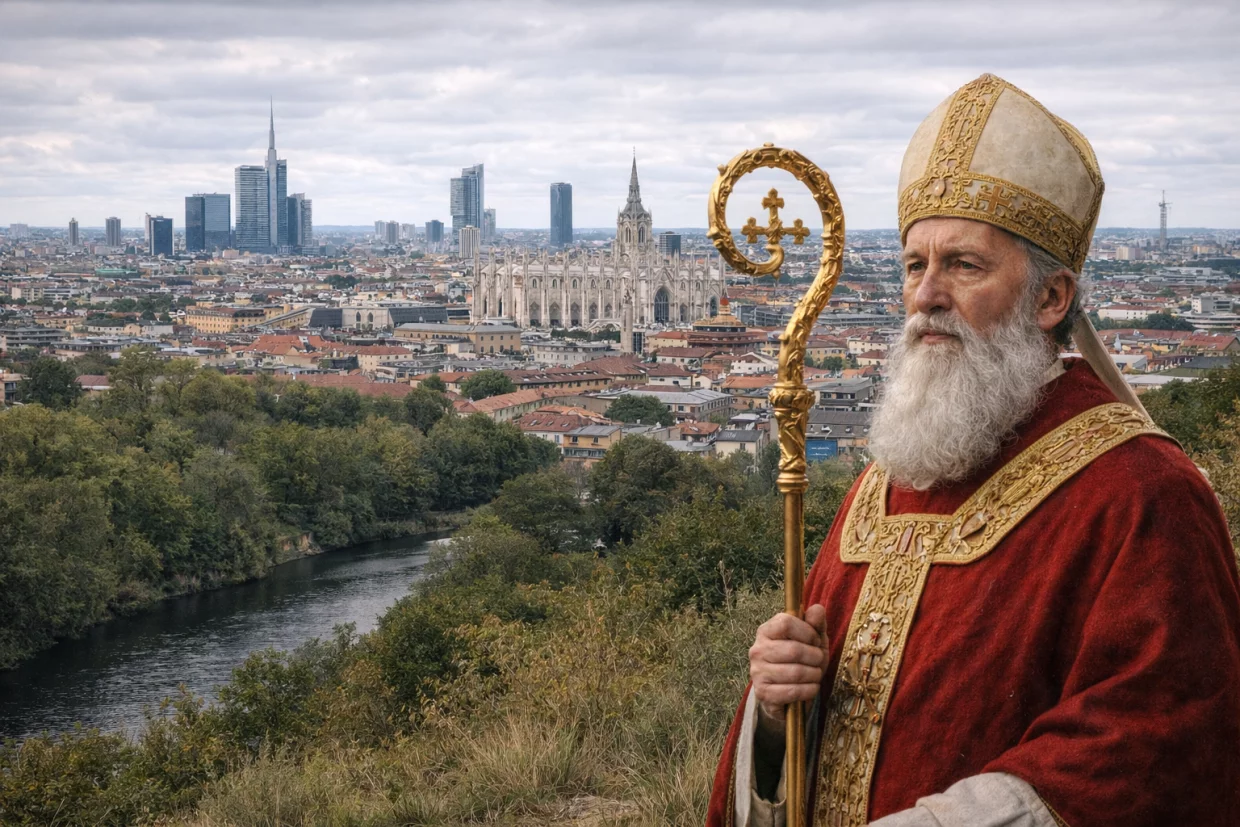
Location & Historical Background
Romantic Setting
Milan lies in northern Italy on the Lombard plain, framed by distant Alpine silhouettes and threaded by historic canals. While less immediately “romantic” than coastal or hill towns, the city impresses with scale, order, and urban confidence. Today, visitors are struck by the contrast between monumental stone landmarks and cutting-edge modern districts.
Origins & Foundation
Founded by Celtic tribes and later conquered by Rome in 222 BC, Milan—then Mediolanum—quickly became one of the Roman Empire’s most important cities. Legend says it was chosen as an imperial capital because it stood “in the middle of the land,” close enough to everything that mattered. By the 4th century AD, it rivaled Rome itself in influence.
The Three Greatest Blows
Barbarian Invasions (5th Century)
With the fall of the Roman Empire in the 5th century, Milan suffered repeated invasions and destruction. Population declined, institutions collapsed, and the city entered centuries of instability.
Spanish and Austrian Rule (16th–18th Centuries)
Between the 1500s and 1700s, Milan passed under foreign domination. Heavy taxation and political control slowed development and drained local power, even as the city remained strategically vital.
World War II Bombings (1943–1944)
In 1943–1944, Allied bombings heavily damaged Milan’s industrial zones and historic center. Post-war reconstruction radically reshaped the city, replacing sentimentality with modern efficiency.
The Golden Age
Milan’s golden age spans two key eras: the Renaissance under the Sforza dynasty (15th century), when art and architecture flourished, and the post-World War II economic boom, when Milan became Italy’s industrial, financial, and fashion capital—roles it still dominates today.
Why Visit the City Today
Today, Milan is bold, international, and constantly reinventing itself. World-class museums coexist with design studios, historic churches sit beside glass towers, and aperitivo culture turns evenings into social rituals. Milan rewards travelers who want depth, modern culture, and a taste of Italy’s future—not just its past.
Tourist Information & Must-See Places
Practical Information (Estimated Averages)
- Average lunch: €12–18
- Average accommodation (per night): €130–220
- One beer: €5–7
- One coffee (espresso at the bar): €1.50–3
Most Interesting Parts of the City
Historic center, Brera district, Navigli canals, Porta Nuova modern quarter, and the fashion districts.
Top 3 Must-See Attractions
Duomo di Milano
A breathtaking Gothic cathedral with thousands of spires, dominating the city center and offering rooftop views unlike anywhere else in Italy.
Galleria Vittorio Emanuele II
An elegant 19th-century arcade that blends luxury shopping, architecture, and Milanese social life under a soaring glass dome.
The Last Supper (Santa Maria delle Grazie)
Leonardo da Vinci’s iconic fresco—subtle, revolutionary, and still powerful—housed in a former monastery and requiring advance planning to see.
Final Summary
Milan doesn’t ask for your affection—it earns your respect. Come for the fashion and finance, stay for the culture and confidence, and leave understanding that Italy’s most modern city still knows exactly where it came from.