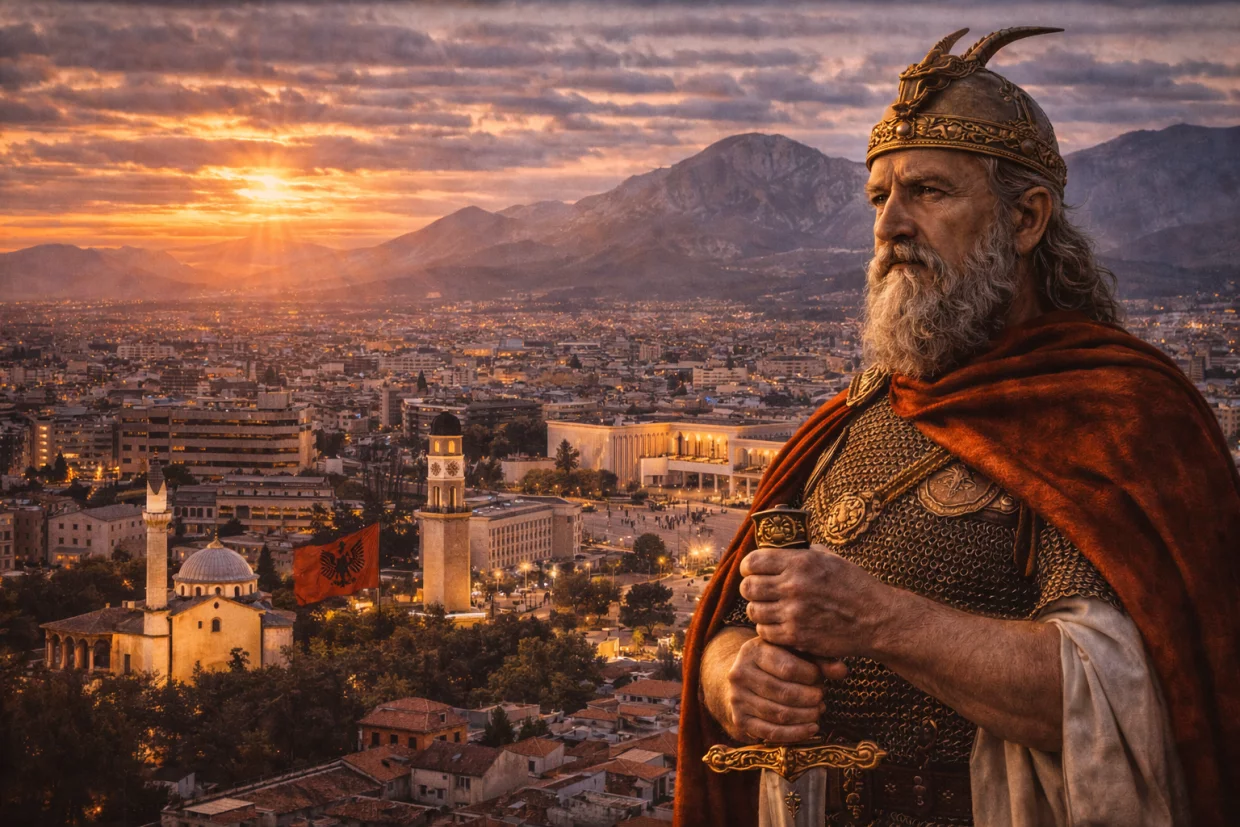
Location and Historical Background
Nestled in a wide valley at the foot of the Dajti Mountains and only about 30 kilometers from the Adriatic Sea, Tirana enjoys a setting that mixes Mediterranean air with Balkan ruggedness. Hills frame the city, olive trees dot the outskirts, and sunsets often paint the sky in dramatic oranges and purples. Today, Tirana astonishes visitors with its bold architecture, chaotic traffic ballet, and a café culture that could rival southern Europe’s finest.
The city was officially founded in 1614, when Ottoman general Sulejman Pasha built a mosque, a bakery, and a hammam—proving that even back then, urban success started with food and relaxation. A popular legend says Tirana grew simply because travelers stopped here too often for rest, gossip, and wine, and never really left.
First great blow – Ottoman decline and instability (19th century):
As Ottoman power weakened during the 1800s, Tirana suffered from political instability, poor infrastructure, and regional conflicts. Trade slowed, local governance weakened, and the city remained a modest provincial town rather than a regional powerhouse. While Europe industrialized, Tirana waited impatiently on the sidelines.
Second great blow – World War II and occupations (1939–1944):
Tirana endured Italian occupation beginning in 1939, followed by German control in 1943. Bombings, shortages, and political repression scarred the city. Buildings were destroyed, civilians displaced, and the population lived under constant uncertainty until liberation in 1944.
Third great blow – Communist isolation (1944–1991):
Perhaps the deepest wound came after the war. Under Enver Hoxha’s regime, Albania sealed itself off from the world. Tirana became the nerve center of a paranoid dictatorship obsessed with control. Thousands of bunkers were built, creativity was suppressed, and the city turned gray—literally and mentally. Progress froze for nearly half a century.
Golden Age – Post-1990 transformation:
Tirana’s golden age began unexpectedly after 1991. The fall of communism unleashed color, chaos, and creativity. A symbolic moment came in the early 2000s when the mayor ordered gray buildings to be painted in bright colors. Since then, investment, tourism, entrepreneurship, and cultural revival have reshaped Tirana into one of Europe’s most surprising comeback cities.
Why Tirana Is Worth Visiting Today
Tirana today is energetic, youthful, and wonderfully unpredictable. It offers a rare blend of history and modern life: Ottoman mosques stand near Italian rationalist buildings, communist relics sit next to hip cafés, and nightlife pulses late into the night. Prices are friendly, locals are welcoming, and the city feels refreshingly unpolished.
What truly sells Tirana is its atmosphere. This is not a museum city—it’s a living organism. Whether you’re sipping espresso for one euro, listening to live music in a former bunker, or watching locals argue passionately about football, Tirana pulls you into its rhythm. It’s a city that doesn’t pretend to be perfect—and that honesty is its greatest luxury.
Tourist Information and Must-See Places
- Average lunch: €6–8
- Average accommodation (mid-range hotel): €50–80 per night
- One beer: €2–3
- One coffee: €1–1.50
Most interesting areas:
Skanderbeg Square, Blloku district, Pazari i Ri (New Bazaar)
Skanderbeg Square
The heart of Tirana and one of the largest pedestrian squares in Europe. Surrounded by key landmarks, museums, and cafés, it’s the perfect place to understand Albania’s past and present in one glance.
Bunk’Art 2
A former nuclear bunker turned museum beneath the city center. It offers a chilling yet fascinating insight into Albania’s communist paranoia, blending history with powerful visual storytelling.
Mount Dajti National Park
Just a short cable-car ride from the city, this green escape offers fresh air, panoramic views, hiking trails, and restaurants. It’s proof that Tirana can be both wild and urban within the same afternoon.
Final Summary
Tirana is not a city you simply visit—it’s a city that argues with you, surprises you, and then invites you for coffee. It may not be polished, but it’s authentic, affordable, and endlessly interesting. If cities had personalities, Tirana would be the friend who shows up late, tells incredible stories, and somehow becomes the highlight of your trip.
Tags: Albania • Balkan • Germany • Italy • Mediterranean • Turkey • War