Location & Historical Background
Romantic Setting
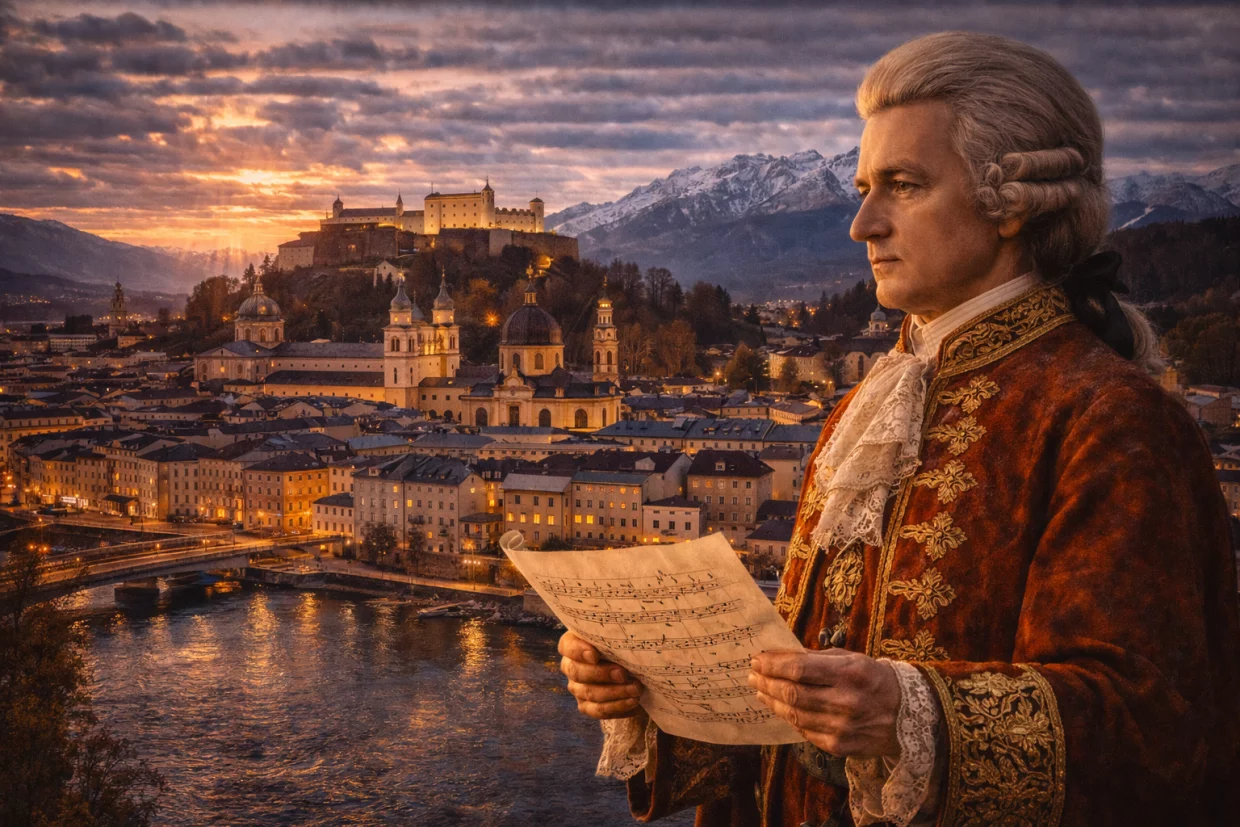
Salzburg sits on the Salzach River, cradled between rolling hills and the dramatic northern Alps. Forested slopes rise directly from the city, while church towers and fortifications dominate the skyline. Today, visitors are instantly struck by the fairytale contrast between baroque architecture and raw mountain scenery.
Origins & Foundation
Salzburg traces its roots back to Roman times, but it truly began to flourish after 696, when Saint Rupert founded a monastery here. Legend claims he followed a mule carrying salt—an omen of prosperity that proved accurate, as salt trade would define the city’s destiny for centuries.
The Three Greatest Blows
The Great Fire of 1127
In 1127, a massive fire tore through Salzburg, destroying large parts of the early medieval settlement. Wooden structures vanished overnight, forcing the city to rebuild in stone and reshaping its architectural future.
Peasants’ War and Siege (1525)
During the German Peasants’ War in 1525, rebels laid siege to Salzburg, threatening both political stability and ecclesiastical power. Though the city held, tensions exposed deep social divides and left lasting scars.
World War II Bombings (1944–1945)
Between 1944 and 1945, Salzburg suffered multiple air raids targeting rail infrastructure. While the Old Town survived relatively intact, surrounding districts were damaged, and civilian casualties marked a somber chapter in the city’s history.
The Golden Age
Salzburg’s golden age spanned the 17th and 18th centuries, when powerful Prince-Archbishops transformed it into a baroque masterpiece. Fueled by salt wealth and absolute rule, they commissioned grand churches, palaces, and squares—many of which remain astonishingly preserved today.
Why Visit the City Today
Salzburg today is a city that lives comfortably with its reputation. Classical music, festivals, historic streets, and surrounding Alpine adventures blend seamlessly. Whether you attend a concert, hike above the rooftops, or simply wander the Old Town, Salzburg delivers an experience that feels curated yet completely authentic.
Tourist Information & Must-See Places
Practical Information (Estimated Averages)
- Average lunch: €14–18
- Average accommodation (per night): €120–180
- One beer: €4–5
- One coffee: €3–4
Most Interesting Parts of the City
Old Town (Altstadt), Neustadt, Mirabell area, and the hills surrounding the historic center.
Top 3 Must-See Attractions
Hohensalzburg Fortress
Towering above the city, this massive medieval fortress offers panoramic views and a deep dive into Salzburg’s political and military past.
Mirabell Palace and Gardens
A baroque ensemble of symmetry and elegance, famous for its flower arrangements, sculptures, and cinematic beauty.
Mozart’s Birthplace
Located on Getreidegasse, this modest yellow house tells the story of Salzburg’s most famous son and the musical legacy he left behind.
Final Summary
Salzburg doesn’t rush—it performs. Every street feels rehearsed, every view perfectly timed. Come for the music, stay for the mountains, and leave humming something you didn’t realize you knew.