Location and Historical Background
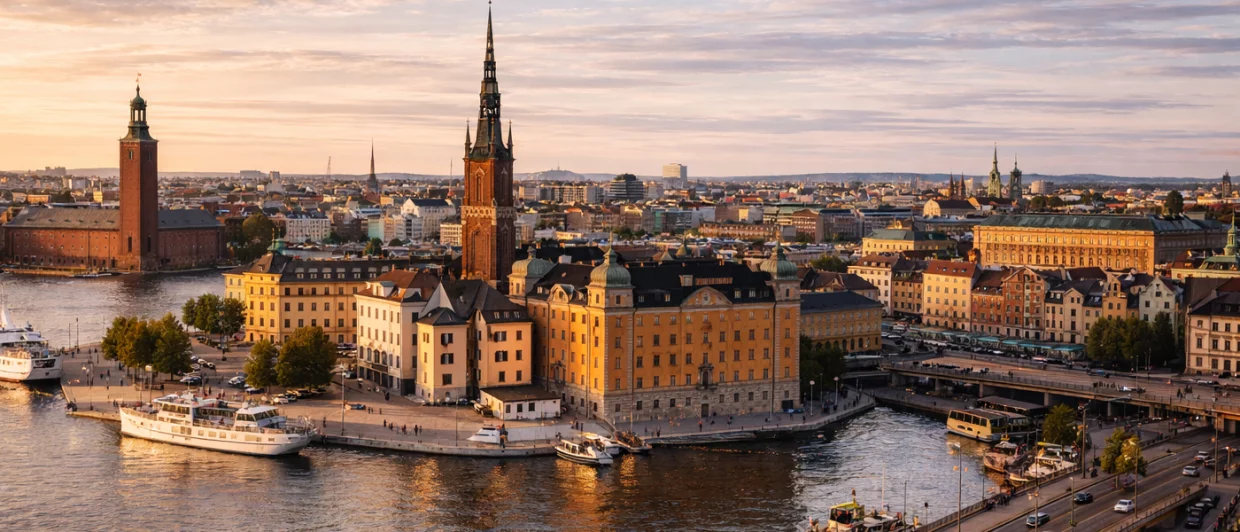
Stockholm sits where Lake Mälaren meets the Baltic Sea, spread across 14 islands connected by more than 50 bridges. Water is everywhere — reflective, calming, and central to the city’s identity. Forests, rocky shores, and archipelagos begin almost immediately beyond the urban core, making Stockholm feel both metropolitan and close to wilderness.
Founded in the 13th century, traditionally dated to 1252, Stockholm emerged as a fortified trading post controlling access between inland Sweden and the Baltic Sea. Legend credits its founding to Birger Jarl, who supposedly chose the location to block enemy ships with floating logs — an early example of Swedish defensive pragmatism. From the start, Stockholm was designed to control flow: of goods, power, and people.
Three Greatest Blows Stockholm Endured
1. The Stockholm Bloodbath (1520)
In November 1520, Danish King Christian II ordered the execution of around 80 Swedish nobles and clergy after capturing the city. The massacre shocked Scandinavia and directly fueled the Swedish War of Independence. Stockholm survived — but trust did not.
2. The Great Fire of 1697
A catastrophic fire destroyed the medieval Tre Kronor Castle, the royal residence. The loss erased centuries of royal history overnight and forced Stockholm to rebuild its political heart from the ground up.
3. Industrial and Social Strain (19th century)
Rapid industrialization brought overcrowding, poverty, and sanitation crises. While Stockholm modernized quickly, the transition tested its infrastructure and social cohesion before reforms stabilized the city.
The Golden Age of Stockholm
Stockholm’s golden age unfolded during the 17th century, when Sweden emerged as a major European power. As capital of the Swedish Empire, Stockholm expanded dramatically, attracting wealth, architecture, and political influence. Many of the city’s grand institutions and urban layouts date from this era, shaping its long-term confidence.
Why Stockholm Is Worth Visiting Today
Modern Stockholm is a masterclass in balance. Historic districts coexist with cutting-edge design, technology hubs, and sustainable urban planning. The city is clean, efficient, and visually restrained — never flashy, always intentional.
Visitors can explore medieval streets in the morning, contemporary museums in the afternoon, and swim in open water by evening. Culture here is accessible, nature integrated, and movement effortless.
In summary, Stockholm is ideal for travelers who want clarity over chaos, depth over excess, and cities that respect both people and space.
Tourist Information and Must-See Sights
Estimated Prices (EUR):
- Average lunch in a restaurant: 14–20 €
- Mid-range hotel per night: 120–180 €
- One beer (0.5 l): 7–9 €
- One coffee: 4–6 €
Most Interesting Areas:
- Gamla Stan (Old Town)
- Södermalm
- Djurgården Island
Top 3 Must-Visit Attractions
Gamla Stan
Stockholm’s medieval Old Town, with narrow streets, colorful facades, and layered history. Compact, atmospheric, and deeply symbolic of the city’s origins.
The Vasa Museum
Home to the 17th-century warship Vasa, which sank on its maiden voyage and was recovered almost perfectly preserved. A rare, humbling monument to ambition and engineering.
Stockholm Archipelago
Thousands of islands stretching into the Baltic Sea. Easily accessible by ferry, offering nature, silence, and perspective just minutes from the city center.
Final Summary
Stockholm doesn’t impress by volume — it refines by subtraction. Nothing feels accidental, nothing feels rushed, and everything seems designed to last. It’s a city that proves civilization doesn’t need to be loud to be powerful.
Tags: Denmark • Scandinavia • Sweden • War