Location and Historical Background
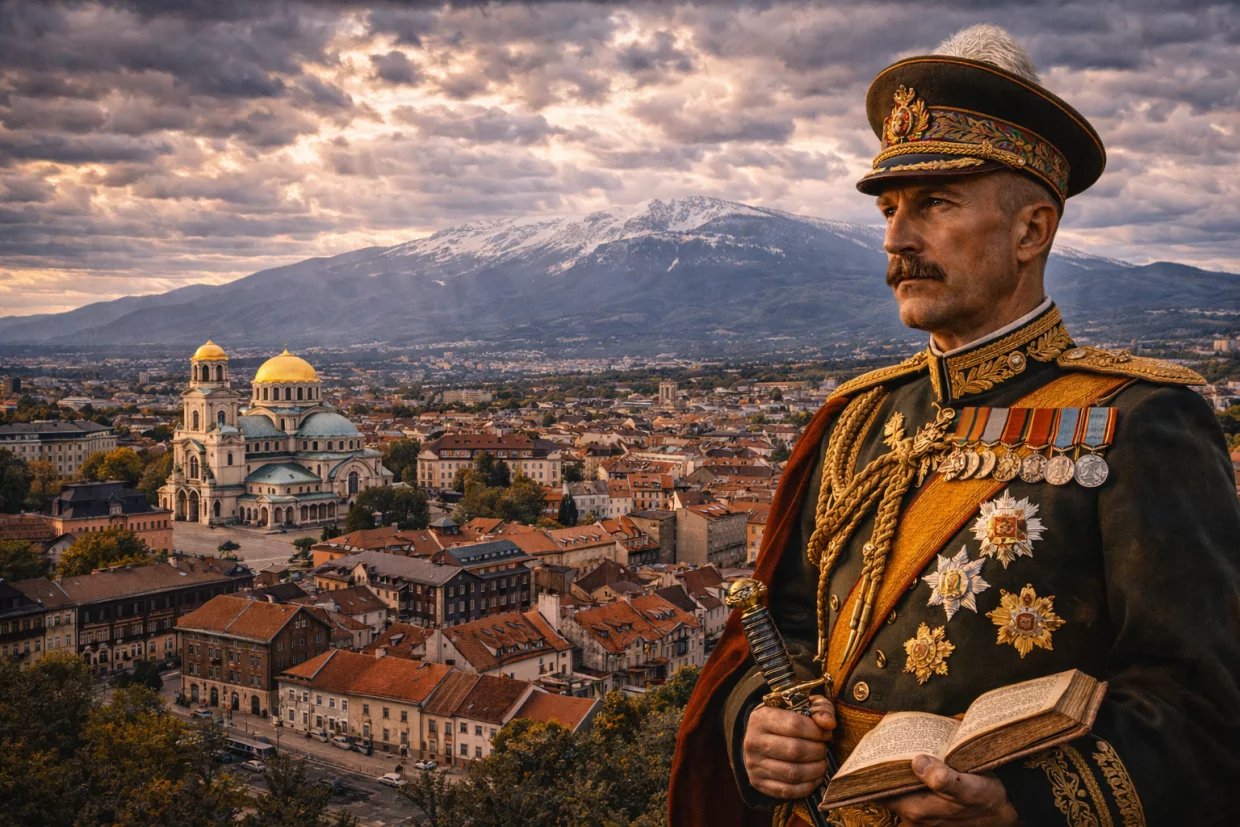
Nestled at the foot of Vitosha Mountain, surrounded by valleys, mineral springs, and distant Balkan ridges, Sofia enjoys a setting that feels both protective and dramatic. Snowy peaks hover above the city in winter, while summer evenings bring mountain air straight into its streets. Even today, Sofia surprises visitors with how close nature feels — a capital where hiking trails begin almost at tram stops.
The city’s story begins long before it was called Sofia. Originally a Thracian settlement, it later became the Roman city of Serdica, a place so beloved that Emperor Constantine the Great allegedly said, “Serdica is my Rome.” Legend has it that people settled here not for glory, but for the hot mineral springs, deciding that warm water and fertile land were reason enough to stay forever — a decision history has proven wise.
Three Greatest Blows Sofia Endured
1. Destruction during the Hun Invasions (5th century, c. 447 AD)
In the mid-5th century, Serdica was devastated by the armies of Attila the Hun. The once-flourishing Roman city was burned, its fortifications shattered, and much of its population scattered. Yet even after this catastrophe, the city rebuilt itself — a pattern that would define Sofia’s entire existence.
2. Ottoman Conquest (1382 AD)
In 1382, Sofia fell to the Ottoman Empire, beginning nearly five centuries of Ottoman rule. Churches were converted or destroyed, administrative systems replaced, and the city’s role shifted dramatically. Despite this, Sofia remained an important regional center, quietly preserving Bulgarian identity beneath the surface.
3. Allied Bombings in World War II (1943–1944)
During World War II, Sofia suffered heavy bombing by Allied forces targeting infrastructure and military sites. Entire neighborhoods were destroyed, thousands of buildings damaged, and many civilians killed. The scars of this period shaped much of Sofia’s modern architecture and accelerated its post-war transformation.
The Golden Age of Sofia
Sofia’s most defining golden age began after 1878, following Bulgaria’s liberation from Ottoman rule. Declared capital in 1879, the city experienced explosive growth. European-style boulevards, universities, theaters, and public institutions emerged rapidly. Architects from Vienna, Prague, and Paris helped transform Sofia into a modern capital — earning it the nickname “the city that grows but does not age.”
Why Sofia Is Worth Visiting Today
Modern Sofia is a fascinating contradiction: ancient ruins under glass floors, communist monuments next to street art, and Orthodox cathedrals standing calmly beside nightlife districts. Visitors can experience Roman streets, medieval churches, Ottoman mosques, and Soviet architecture within a single afternoon walk.
The city offers vibrant cultural life, affordable prices, excellent food, and an unpretentious atmosphere. Nearby mountains, monasteries, and villages expand the experience beyond the city limits. Sofia doesn’t try to impress — and that’s precisely why it does.
In summary, Sofia is ideal for travelers who prefer layers over landmarks, stories over spectacles, and cities that reveal themselves slowly but generously.
Tourist Information and Must-See Sights
Estimated Prices (EUR):
- Average lunch in a restaurant: 8–12 €
- Mid-range hotel per night: 60–90 €
- One beer (0.5 l): 2–3 €
- One coffee: 1.5–3 €
Most Interesting Areas:
- City Center (around Serdika and Largo)
- Oborishte district
- Lozenets and Vitosha Boulevard area
Top 3 Must-Visit Attractions
Alexander Nevsky Cathedral
This monumental Orthodox cathedral, completed in 1912, is the spiritual symbol of Sofia. Built to honor Russian soldiers who died liberating Bulgaria, its golden domes dominate the skyline and its interior is equally breathtaking.
The Ancient Serdica Complex (Largo)
Beneath modern Sofia lies Roman Serdica. Glass-covered ruins reveal streets, baths, and public buildings from the 4th century, offering a rare chance to walk through an ancient city in the heart of a modern capital.
Vitosha Mountain
Just south of the city, Vitosha offers hiking, skiing, panoramic views, and fresh air. It’s one of the few European capitals where wilderness feels genuinely close — a perfect escape after a day of urban exploration.
Final Sumary
Sofia is not love at first sight — it’s love at third coffee, fourth ruin, and fifth unexpected story. It doesn’t seduce; it convinces. And once it does, you’ll realize that some capitals don’t need to shine — they endure.