Location & Historical Background
Romantic Setting
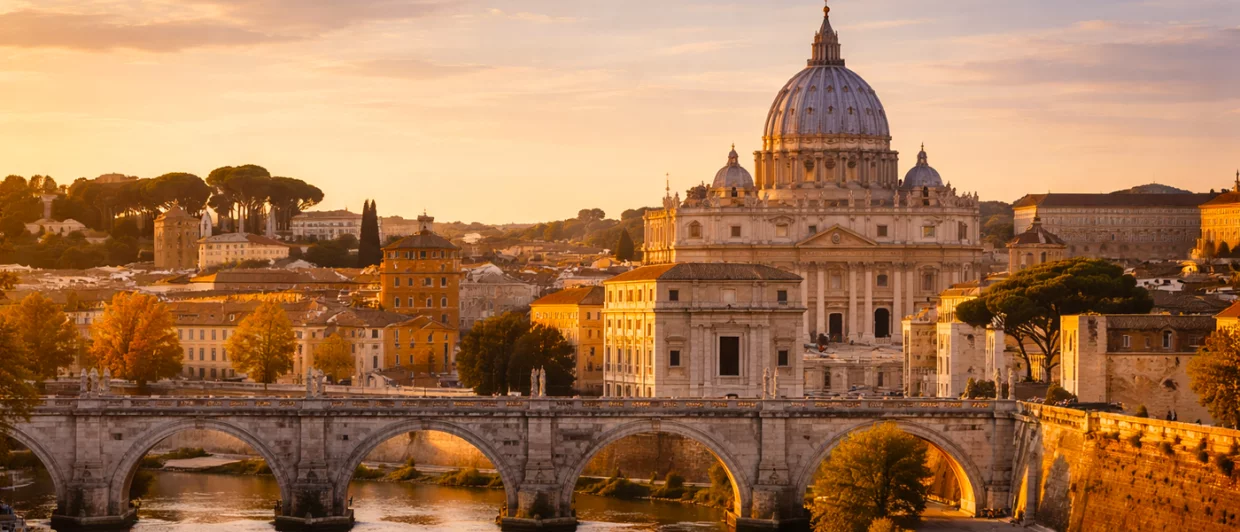
Rome lies along the Tiber River in central Italy, spread across seven legendary hills and framed by cypress-lined vistas and warm Mediterranean light. Ruins rise casually between cafés, churches hide behind apartment blocks, and today’s visitors are constantly astonished by how antiquity and everyday life coexist without apology.
Origins & Foundation
According to legend, Rome was founded in 753 BC by Romulus, raised by a she-wolf—an origin story that perfectly matches the city’s confidence. Archaeology confirms early settlement centuries before the Roman Republic emerged. From village to empire, Rome expanded relentlessly, shaping law, language, engineering, and power across Europe and beyond.
The Three Greatest Blows
The Sack of Rome (410 AD)
In 410 AD, the Visigoths sacked Rome, shocking a world that believed the city eternal. Though the empire had already weakened, this event symbolized the collapse of Roman invincibility and marked a turning point in European history.
The Sack of Rome (1527)
In 1527, troops of Emperor Charles V brutally looted Rome. Churches were desecrated, artists fled, and papal authority was humiliated. The Renaissance city suffered immense cultural and human loss.
World War II Occupation (1943–1944)
During 1943–1944, Rome was occupied by Nazi forces. Deportations, executions, and fear scarred the city, even as much of its historic fabric survived thanks to its symbolic status.
The Golden Age
Rome’s golden age spans multiple eras, but none rival the 1st–2nd centuries AD, when the Roman Empire reached its peak. Monumental architecture, infrastructure, and governance turned Rome into the center of the known world—an achievement that still defines Western civilization.
Why Visit the City Today
Today, Rome is chaotic, beautiful, exhausting, and unforgettable. You can walk through ancient forums, attend mass in a Baroque church, eat pasta perfected over generations, and stumble upon masterpieces without trying. Rome rewards patience, curiosity, and strong walking shoes more than any itinerary ever could.
Tourist Information & Must-See Places
Practical Information (Estimated Averages)
- Average lunch: €12–18
- Average accommodation (per night): €120–220
- One beer: €4–6
- One coffee (espresso at the bar): €1.50–2.50
Most Interesting Parts of the City
Historic Center, Vatican area, Trastevere, Colosseum & Forum zone, and the hilltop viewpoints.
Top 3 Must-See Attractions
Colosseum & Roman Forum
The heart of ancient Rome, where gladiators fought, emperors ruled, and history unfolded on a monumental scale.
Vatican City & St. Peter’s Basilica
The spiritual center of Catholicism, combining faith, art, and architecture at a scale unmatched anywhere else.
Pantheon
A perfectly preserved Roman temple with a concrete dome that still challenges modern engineering—and quietly humbles it.
Final Summary
Rome doesn’t care if you’re tired—it has been waiting two thousand years. Come for the history, stay for the food and light, and leave knowing that no matter how much you saw, Rome kept a few secrets for itself.
Tags: Italy