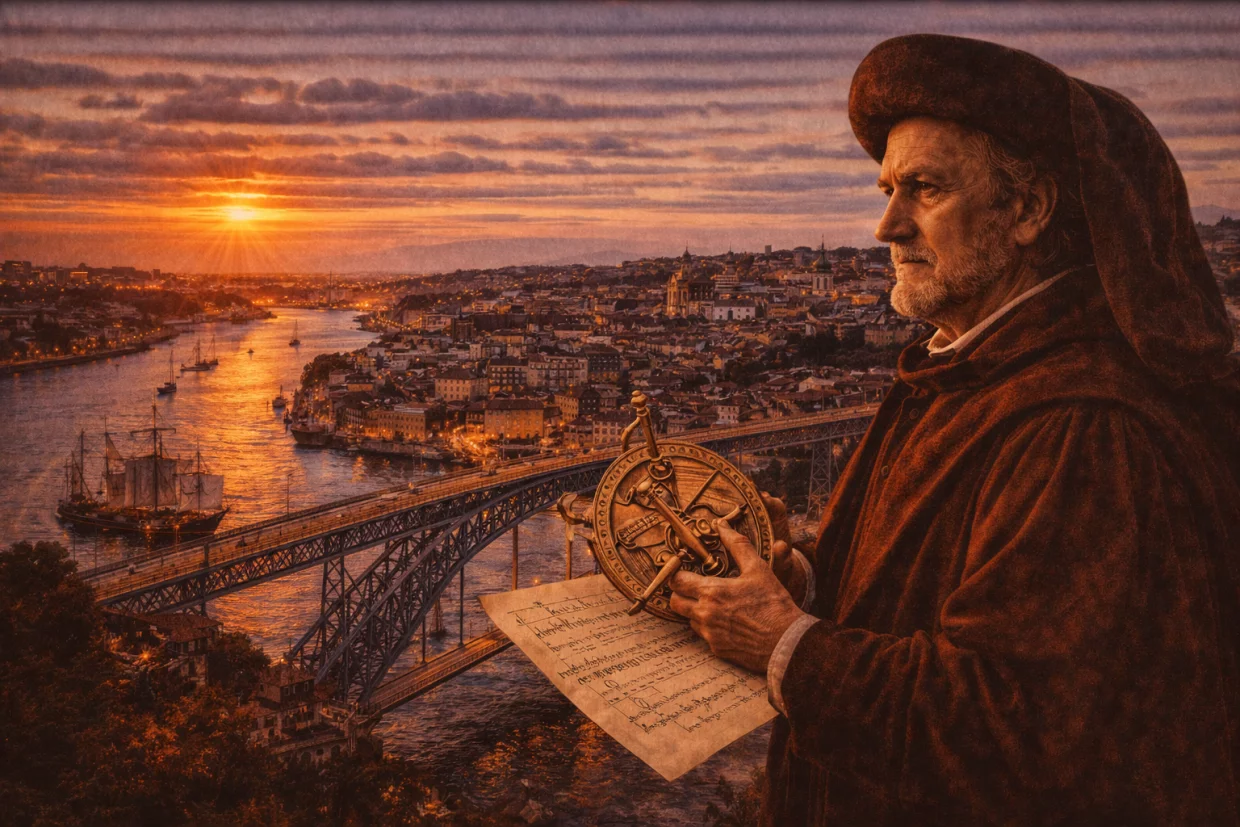
Location and Historical Background
Porto rises along the steep banks of the Douro River near its Atlantic mouth, where hills stack houses like stone amphitheaters facing the water. The climate is Atlantic-cooler, windier, and moodier than southern Portugal—perfectly matched to the city’s granite architecture and reserved temperament. Today, visitors are struck by the vertical drama: bridges spanning air, streets tumbling downhill, and river life tying everything together.
Human settlement here dates back to Roman times as Portus Cale—the name that would later give birth to “Portugal” itself. Legend says the city was forged by necessity: a port that had to endure storms, trade, and invasion. Over centuries, Porto grew as a commercial engine rather than a royal showcase, shaping a culture built on labor, loyalty, and resilience.
The Three Biggest Blows Porto Endured:
- The Moorish and Reconquest Conflicts (8th–11th Centuries)
Repeated struggles for control disrupted early development and fortified the city’s defensive character. Porto learned early how to survive pressure from outside forces. - The Siege of Porto (1832–1833)
During the Liberal Wars, Porto endured a year-long siege that brought starvation, disease, and destruction. The city’s refusal to surrender became a defining moment of civic pride. - Industrial Decline (Late 20th Century)
As traditional industries weakened, unemployment and urban decay spread. Porto faced the challenge of reinvention without erasing its identity.
The Golden Age of Porto
Porto’s golden age unfolded between the 17th and 19th centuries, fueled by maritime trade and the global export of port wine. Strong ties with Britain boosted commerce, infrastructure, and wealth. Warehouses, bridges, and merchant houses transformed the riverfront into an economic powerhouse that shaped Portugal’s modern economy.
Why Porto Is Worth Visiting Today
Modern Porto feels grounded rather than trendy—yet it quietly excels. The city offers world-class wine culture, exceptional food rooted in northern traditions, and neighborhoods that still function for locals. Restoration has respected texture rather than replacing it, allowing Porto to evolve without losing weight or meaning.
In essence, Porto rewards travelers who slow down, look closer, and value authenticity over novelty.
Tourist Information and Must-See Goals
Average Costs (Estimated):
- Average lunch: €10–13
- Mid-range accommodation (per night): €85–130
- One beer: €2–3.50
- One coffee: €1.20–2
Most Interesting Areas for Visitors:
Ribeira district, Vila Nova de Gaia riverfront, historic center, Douro riverbanks.
Three Must-Visit Highlights:
- Ribeira
A dense, colorful riverside quarter where Porto’s daily life unfolds. Lively, imperfect, and deeply atmospheric. - Dom Luís I Bridge
An iron bridge spanning the Douro with dramatic views. More than infrastructure—it’s a symbol of Porto’s industrial confidence. - Vila Nova de Gaia
Home to the historic port wine cellars. Crossing the river here feels like entering Porto’s liquid archive.
Final Summary
Porto is a city that carries weight—and knows it. Its stones are heavy, its history hard-earned, and its personality shaped by work rather than display. Unlike capitals built to impress, Porto was built to function: to trade, to endure weather, to survive sieges, and to keep going when conditions were less than kind. That pragmatism still defines it today.
What makes Porto important is its refusal to dilute itself. Even as tourism grows, the city retains a sense of local rhythm—meals remain hearty, conversations direct, and traditions untheatrical. Porto doesn’t sell nostalgia; it lives with it. The Douro is not a backdrop but a working artery, and wine is not branding but heritage.
Porto matters because it represents a different kind of European city—one that proves dignity doesn’t require polish, and beauty doesn’t need perfection. It invites visitors to engage rather than consume, to listen rather than rush, and to leave with respect instead of souvenirs. Porto doesn’t ask to be loved. It earns it—slowly, honestly, and for the long term.