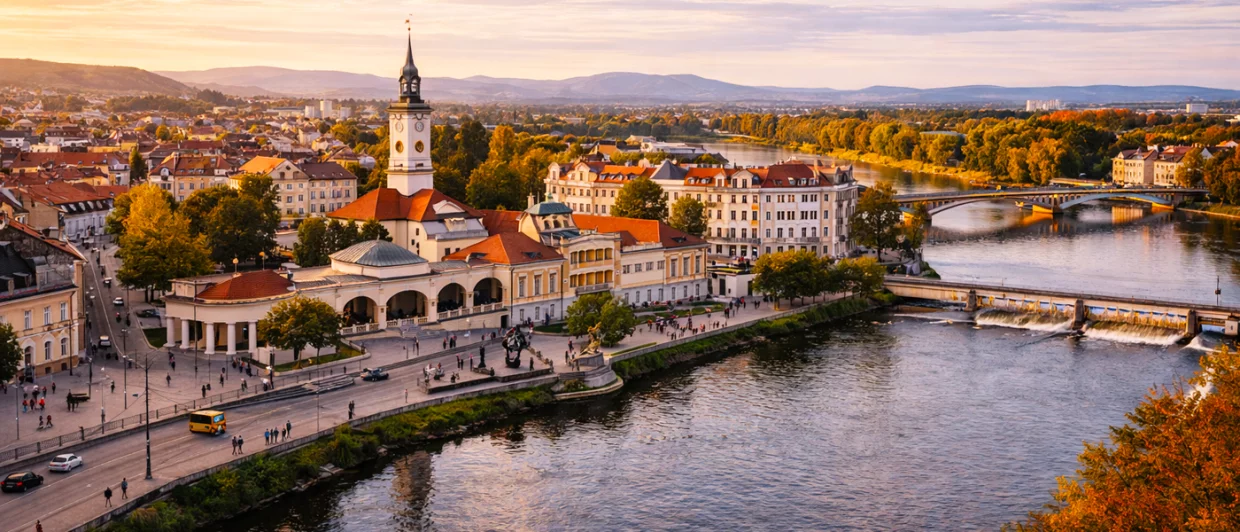
Romantic Setting
Piešťany lies gently along the banks of the River Váh, surrounded by low hills, green river meadows, and parks that feel designed for slow walks and slower thoughts. Today, visitors are impressed by the calm harmony of spa architecture, leafy promenades, and the unmistakable smell of mineral water that quietly promises relief.
Origins & Foundation
The first written mention of Piešťany dates back to 1113, though local legend claims the town was founded when a limping knight noticed his horse standing stubbornly in warm mud—and both walked away healed. Whether knight or horse came first remains unclear, but people settled here early, drawn by bubbling springs that seemed almost magical.
The Three Greatest Blows
Floods of 1813
In 1813, the River Váh reminded the town who was in charge. Catastrophic floods submerged large parts of Piešťany, destroying wooden houses, bridges, and early spa facilities. Recovery took years, but the disaster pushed the town toward sturdier stone construction and better river management.
Cholera Epidemic of 1831
The cholera outbreak of 1831 struck hard, emptying streets and overwhelming local healers who were suddenly powerless without their beloved waters. Many inhabitants fled, and trade halted almost completely. Ironically, the epidemic later led to stricter hygiene standards in the spa operations.
World War II Damage (1945)
In 1945, retreating German forces destroyed the Colonnade Bridge, a symbolic blow to the spa town’s heart. Though civilian damage was limited, the loss of the bridge marked the end of an era and the beginning of post-war rebuilding under very different political conditions.
The Golden Age
Piešťany’s golden age arrived in the late 19th and early 20th centuries, driven largely by the Winter family, visionary spa entrepreneurs. With imperial guests, artists, and aristocrats arriving from across Europe, the town flourished. Grand hotels, elegant bathhouses, and the now-iconic spa island were born, transforming Piešťany into a Central European wellness capital.
Why Visit the City Today
Today, Piešťany is where old-world spa culture meets modern relaxation. Whether you come for medical treatments, cycling paths along the Váh, cultural festivals, or simply to do absolutely nothing in a very elegant way, the town delivers. Its compact size makes everything walkable, its cafés invite long conversations, and the surrounding countryside adds just enough adventure to balance the baths.
Tourist Information & Must-See Places
Practical Information (Estimated Averages)
- Average lunch: €10–14
- Average accommodation (per night): €80–130
- One beer: €2.50–3.50
- One coffee: €2–3
Most Interesting Parts of the City
Spa Island, the pedestrian city center, riverside promenades, and the historic park zones.
Top 3 Must-See Attractions
Spa Island (Kúpeľný ostrov)
The soul of Piešťany, packed with historic spa houses, thermal pools, and manicured parks. Even without a treatment, walking here feels therapeutic.
Colonnade Bridge
Rebuilt after WWII, this functionalist bridge is both a landmark and a symbol of healing, famously decorated with the “Crutch-Breaker” statue.
Balneological Museum
Housed in historic spa buildings, the museum tells the story of Piešťany’s waters, mud, and the people who turned natural springs into a world-renowned cure.
Final Summary
Piešťany doesn’t shout for attention—it simply invites you to sit down, breathe out, and maybe cancel your return ticket. Come for the cure, stay for the calm, and leave wondering why all towns aren’t built around healing.