Location and Historical Background
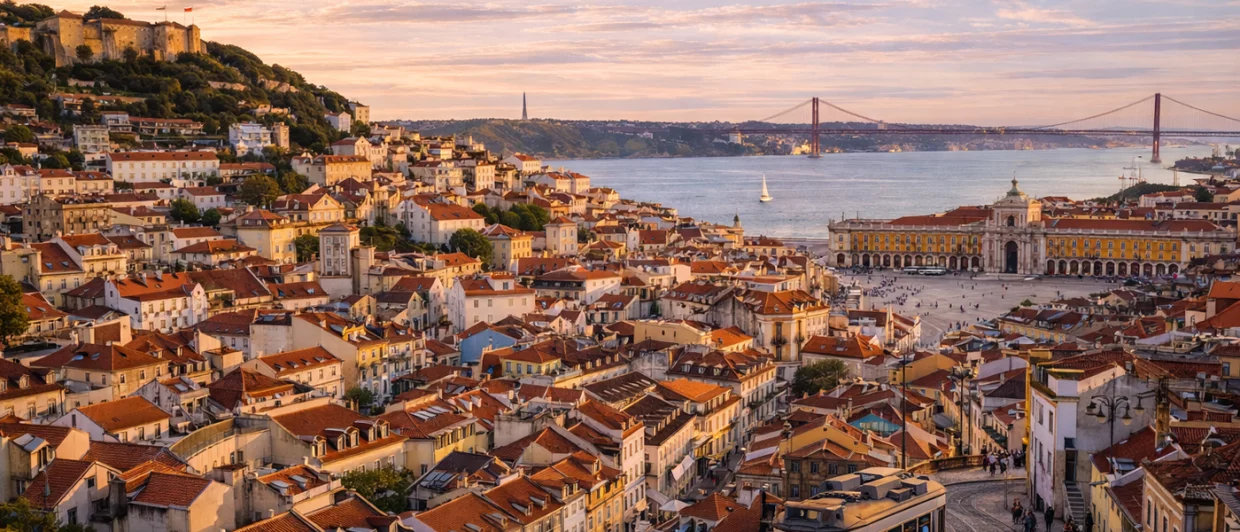
Lisbon stretches across a series of hills overlooking the wide Tagus River as it opens into the Atlantic Ocean. Light reflects endlessly off water, stone, and pastel buildings, giving the city its unmistakable glow. The ocean is near, the wind constant, and the city’s geography ensures that walking here is always rewarded with a view. Today, visitors are struck by Lisbon’s layered verticality—streets climbing, descending, and revealing unexpected panoramas at every turn.
Lisbon’s origins reach back over 3,000 years, making it one of Europe’s oldest capitals. Phoenicians, Romans, Visigoths, and Moors all left their mark before the city became definitively Portuguese in 1147. Legend claims Lisbon was founded by Odysseus himself—a myth the city seems happy to tolerate, given its poetic temperament and maritime destiny.
The Three Biggest Blows Lisbon Endured:
- The Great Earthquake of 1755
On November 1, 1755, a massive earthquake followed by a tsunami and fires destroyed much of Lisbon. Tens of thousands died, and entire districts vanished. The disaster reshaped not only the city’s architecture but also European philosophy, politics, and urban planning. - Loss of Colonial Power (19th–20th Centuries)
As Portugal’s empire declined, Lisbon lost wealth, influence, and confidence. Economic stagnation and emigration defined much of the modern era. - Dictatorship and Isolation (1933–1974)
Decades under authoritarian rule limited cultural and economic development. Lisbon remained beautiful—but restrained, waiting for change.
The Golden Age of Lisbon
Lisbon’s golden age unfolded during the 15th and 16th centuries, the Age of Discoveries. As the launch point for explorers like Vasco da Gama, Lisbon became one of the richest and most influential cities in the world. Trade, science, and art flourished, and the city stood at the center of global exploration.
Why Lisbon Is Worth Visiting Today
Modern Lisbon feels reflective rather than rushed. It blends tradition and renewal without erasing either. Neighborhoods remain local, food is rooted in simplicity, and music carries emotion rather than volume. The city is affordable, walkable, and deeply human—perfect for travelers who enjoy cities as lived spaces, not curated experiences.
In essence, Lisbon offers depth without pressure and beauty without performance.
Tourist Information and Must-See Goals
Average Costs (Estimated):
- Average lunch: €10–13
- Mid-range accommodation (per night): €90–140
- One beer: €2–3.50
- One coffee: €1.20–2
Most Interesting Areas for Visitors:
Alfama, Bairro Alto, Baixa, Belém, riverside viewpoints.
Three Must-Visit Highlights:
- Alfama
The oldest neighborhood in Lisbon. Narrow streets, laundry lines, and fado echoes create a deeply intimate atmosphere. - Belém Tower
A symbol of Portugal’s maritime past, standing where explorers once departed into the unknown. - Jerónimos Monastery
A masterpiece of Manueline architecture and a monument to Lisbon’s golden age of exploration.
Final Summary
Lisbon is a city built on acceptance—of loss, distance, memory, and time. Its beauty is inseparable from melancholy, its charm tied to imperfection. Earthquakes leveled it, empires lifted and abandoned it, and generations left in search of better lives. Yet Lisbon endured, not by resisting change, but by absorbing it quietly and continuing forward.
What makes Lisbon significant is not just what it achieved historically, but how it carries that history today. The city does not polish away its scars; it lives alongside them. Streets feel honest, buildings feel inhabited, and traditions remain part of daily life rather than museum exhibits. Lisbon teaches visitors that cities do not need to be fast, loud, or new to be relevant.
Lisbon matters because it offers something increasingly rare in modern travel: emotional authenticity. It invites you to walk without urgency, to listen, to reflect, and to leave with a feeling rather than a checklist. It’s a city that doesn’t try to hold you—but somehow stays with you long after you’ve gone.