Location & Historical Background
Romantic Setting
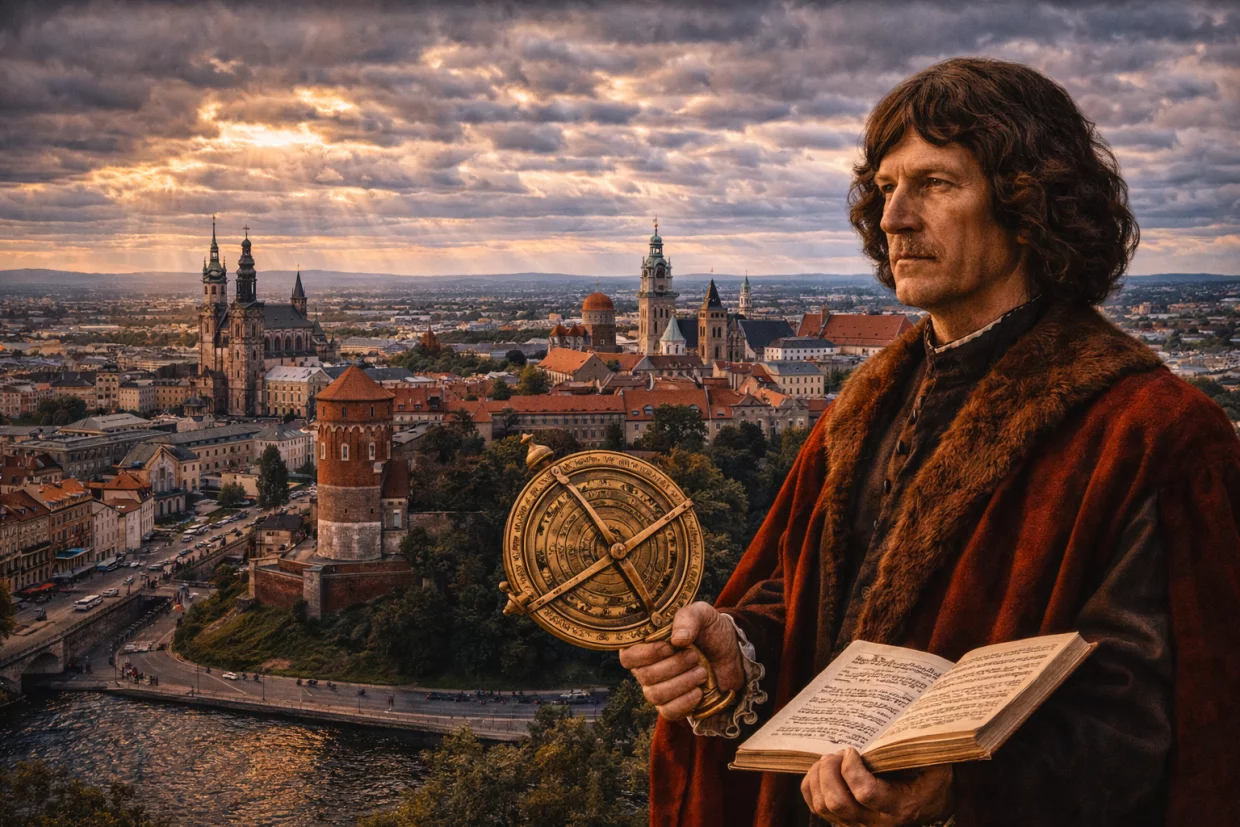
Krakow lies along the Vistula River at the edge of rolling hills and limestone uplands of southern Poland. Green riverbanks, park rings, and church spires frame a compact historic core. Today, visitors are struck by the city’s calm confidence—grand without being overwhelming, lively without being loud.
Origins & Foundation
Krakow’s origins reach back to early Slavic settlements, with the city rising to prominence in the 10th century. Legend credits its founding to Prince Krak, who defeated a dragon beneath Wawel Hill—proof that civic branding started early. By the Middle Ages, Krakow had become Poland’s political, economic, and spiritual center.
The Three Greatest Blows
The Mongol Invasion (1241)
In 1241, Mongol forces devastated Krakow, burning much of the medieval city. Though the population suffered heavily, the catastrophe led to a rebuilt city planned around a vast central square—an urban decision that still defines Krakow today.
The Swedish Deluge (1655–1657)
During the 1655–1657 Swedish invasion, Krakow was occupied and plundered. Churches, libraries, and treasuries were looted, and the city entered a long period of decline as Poland’s political focus shifted elsewhere.
World War II Occupation (1939–1945)
Occupied by Nazi Germany from 1939 to 1945, Krakow avoided large-scale physical destruction but suffered immense human loss, particularly within its Jewish community. The war permanently altered the city’s social fabric and memory.
The Golden Age
Krakow’s golden age spanned the 14th to 16th centuries, when it served as Poland’s royal capital. Under kings like Casimir III the Great, the city flourished through trade, scholarship, and culture—founding one of Europe’s oldest universities in 1364 and building monuments that still command respect.
Why Visit the City Today
Today, Krakow feels both timeless and young. A huge student population fuels cafés, festivals, and nightlife, while the UNESCO-listed Old Town and nearby districts offer depth and reflection. Whether you’re drawn to history, music, food, or thoughtful wandering, Krakow rewards curiosity generously.
Tourist Information & Must-See Places
Practical Information (Estimated Averages)
- Average lunch: €8–12
- Average accommodation (per night): €80–140
- One beer: €2.50–4
- One coffee: €2.50–4
Most Interesting Parts of the City
Old Town (Stare Miasto), Wawel Hill, Kazimierz district, and the Vistula riverbanks.
Top 3 Must-See Attractions
Wawel Castle
The former seat of Polish kings, rising above the Vistula, combining Gothic, Renaissance, and Baroque layers with national symbolism.
Main Market Square (Rynek Główny)
One of Europe’s largest medieval squares, framed by historic townhouses, the Cloth Hall, and St. Mary’s Basilica—still the city’s living heart.
Kazimierz
The historic Jewish quarter, now a vibrant cultural district blending synagogues, galleries, cafés, and powerful historical memory.
Final Summary
Krakow doesn’t chase relevance—it defines it quietly. Come for the castles and legends, stay for the students and streets, and leave with the sense that some cities don’t age—they accumulate meaning.
Tags: Germany • Poland • Scandinavia • Sweden