Location & Historical Background
Romantic Setting
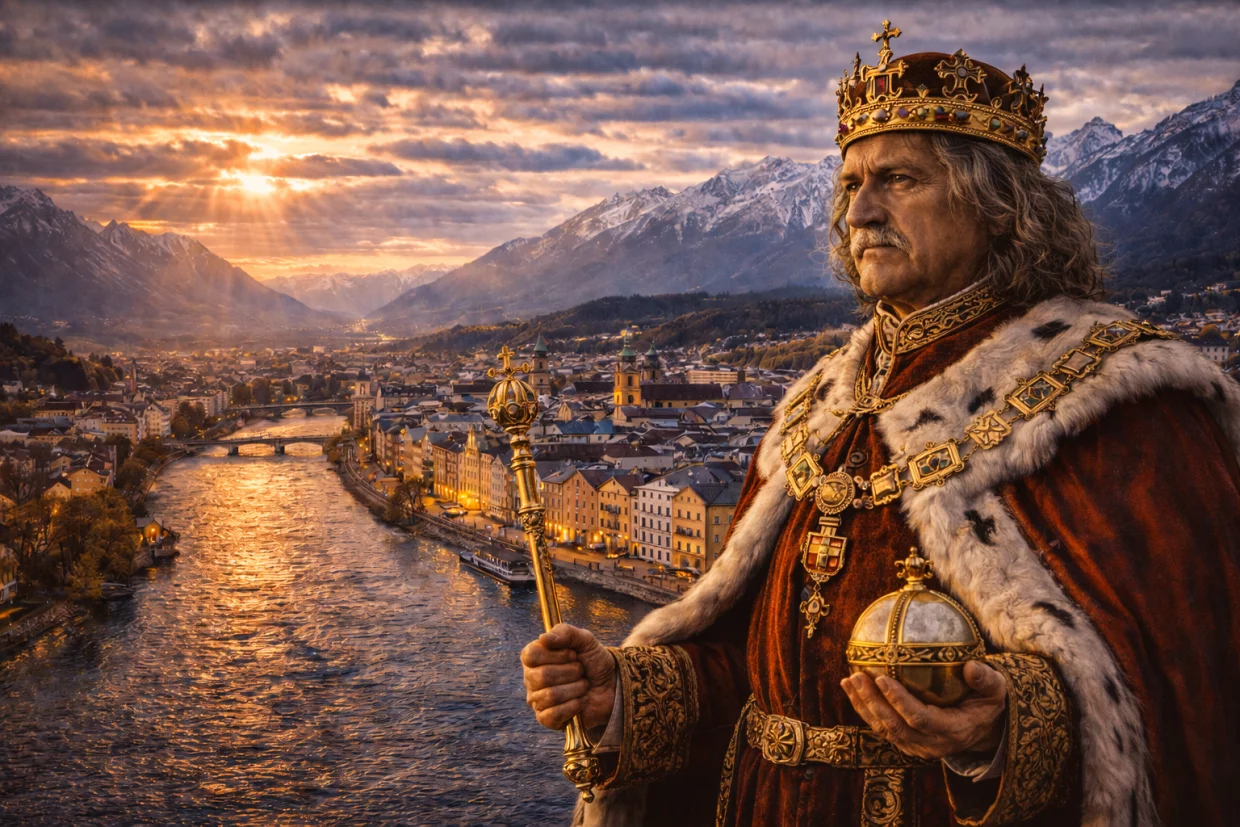
Nestled in the Inn Valley and embraced by the Nordkette mountains, Innsbruck enjoys one of Europe’s most theatrical urban backdrops. Rivers, alpine forests, and steep slopes surround the city, while today’s visitors are amazed by how effortlessly medieval streets coexist with cutting-edge alpine infrastructure.
Origins & Foundation
Innsbruck’s name first appeared in 1187, referring to a bridge (“Brücke”) over the River Inn that made the settlement a vital Alpine crossing. Legend claims merchants argued so fiercely over tolls at the bridge that the town grew simply because no one ever left. Strategic location turned Innsbruck into a trading hub almost overnight.
The Three Greatest Blows
The Alpine Earthquake of 1670
In 1670, a strong earthquake shook Innsbruck and damaged churches, homes, and fortifications. Though casualties were limited, reconstruction drained city finances and delayed expansion for decades.
Napoleonic Wars and the Tyrolean Uprising (1809)
The year 1809 brought occupation, rebellion, and bloodshed as Tyrolean forces resisted Bavarian and French control. Innsbruck changed hands several times, suffering economic collapse and political uncertainty.
World War II Bombings (1943–1945)
Due to its rail connections, Innsbruck was bombed repeatedly between 1943 and 1945. The historic center survived surprisingly well, but infrastructure damage and civilian losses left long scars on the city.
The Golden Age
Innsbruck’s golden age came during the 15th and 16th centuries, when Emperor Maximilian I made the city a Habsburg residence. Court life, trade routes through the Alps, and imperial patronage transformed Innsbruck into a political and cultural jewel of the region.
Why Visit the City Today
Today, Innsbruck offers a rare balance: a lively university city wrapped in Alpine adventure. You can wander baroque streets, visit imperial palaces, and then ascend thousands of meters above sea level within minutes. Few cities let you shift so smoothly from culture to wilderness—and back again for dinner.
Tourist Information & Must-See Places
Practical Information (Estimated Averages)
- Average lunch: €14–18
- Average accommodation (per night): €120–180
- One beer: €4–5
- One coffee: €3–4
Most Interesting Parts of the City
Old Town (Altstadt), Maria-Theresien-Straße, the university district, and the Nordkette foothills.
Top 3 Must-See Attractions
Golden Roof (Goldenes Dachl)
Innsbruck’s most iconic landmark, built in the 15th century as an imperial viewing balcony, shimmering with fire-gilded copper tiles.
Nordkette Cable Car
A modern engineering marvel that carries visitors from the city center straight into high Alpine terrain, offering breathtaking views within minutes.
Imperial Palace (Hofburg)
A grand reminder of Habsburg power, showcasing lavish halls, historical apartments, and centuries of political ambition.
Final Summary
Innsbruck is proof that you don’t have to choose between culture and altitude. Come for the mountains, stay for the history, and leave with sore legs and a full memory card.