Location and Historical Background
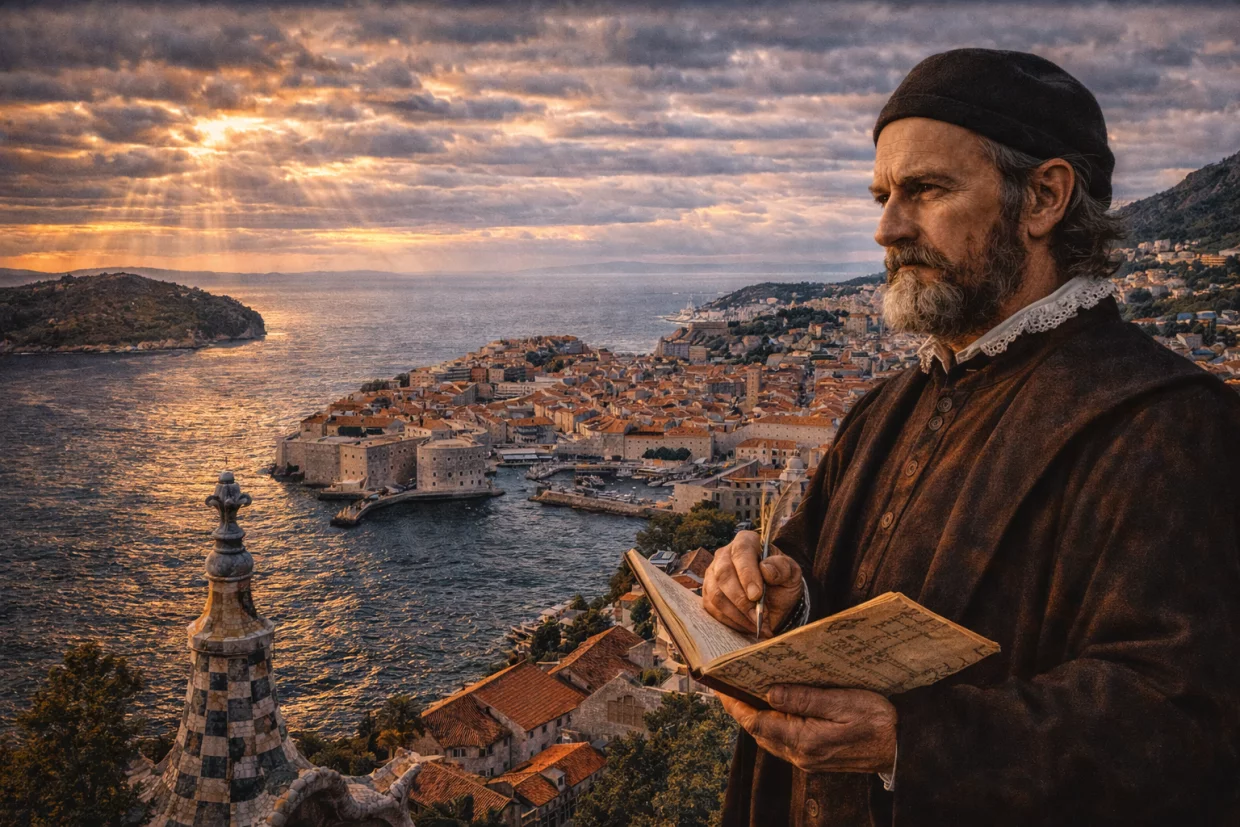
Dubrovnik clings dramatically to the southern Dalmatian coast of Croatia, washed by the deep-blue waters of the Adriatic Sea and backed by steep limestone hills crowned by Mount Srđ. The setting is unapologetically romantic: cliffs, sea, blazing sunsets, and the sense that the city chose this spot to show off.
The city traces its origins to the 7th century, when refugees fleeing the destruction of Epidaurum founded a settlement called Ragusa. A local legend claims the city survived because its founders preferred negotiation over swords—a habit that would later define Dubrovnik’s entire political philosophy. Over centuries, Dubrovnik evolved into a proud maritime republic, balancing diplomacy between powerful empires while quietly getting rich.
The First Great Blow – The Earthquake of 1667
On April 6, 1667, a devastating earthquake struck Dubrovnik, killing thousands and destroying most public buildings. Fires raged for days, the rector died in the collapse of the palace, and the city’s elite was almost wiped out. This catastrophe abruptly ended Dubrovnik’s golden age, yet the city rebuilt itself with remarkable discipline, adopting stricter architectural rules that still define its harmonious look today.
The Second Great Blow – The Napoleonic Occupation (1806–1808)
After centuries of independence, Dubrovnik fell victim to geopolitics. In 1808, Napoleon abolished the Republic of Ragusa, ending over 450 years of sovereignty. The city was absorbed into the French Empire, later passing to Austria. Though spared destruction, Dubrovnik lost its political autonomy—arguably the most painful wound for a city built on independence.
The Third Great Blow – The Siege of 1991–1992
During the Croatian War of Independence, Dubrovnik was shelled by Yugoslav forces despite having no significant military value. In 1991, the Old Town was heavily damaged, shocking the world. The attack became a symbol of cultural destruction in modern warfare. Painstaking restoration followed, and today the scars are nearly invisible—but never forgotten.
The Golden Age of Dubrovnik
Dubrovnik’s golden age spanned the 15th and 16th centuries under the Republic of Ragusa. Its success was built on maritime trade, skilled diplomacy, advanced laws, and an early abolition of slavery in 1416. While empires fought, Dubrovnik negotiated—and prospered.
Why Dubrovnik Is Worth Visiting Today
Dubrovnik today is a living museum that refuses to feel dusty. The Old Town pulses with life, cafés spill onto ancient streets, and the sea remains the city’s eternal companion. Beyond history, Dubrovnik offers pristine beaches, island-hopping adventures, refined cuisine, and some of the most cinematic views in Europe.
The city also gained global fame as a filming location for Game of Thrones, attracting a new generation of visitors who come for fantasy and stay for reality. Despite its fame, Dubrovnik retains dignity—it knows exactly who it is, and it doesn’t need to shout.
In summary, Dubrovnik is not just a destination; it is a masterclass in survival, elegance, and restraint. Few cities combine beauty, history, and atmosphere so effortlessly.
Tourist Information and Must-See Sights
- Average lunch: €15–20
- Average accommodation (mid-range hotel): €120–180 per night
- Beer (0.5 l): €6–7
- Coffee: €3–4
Most interesting areas: The Old Town, Lapad, Ploče, and the surrounding islands.
Old Town Dubrovnik
A UNESCO-listed masterpiece enclosed by massive stone walls. Wandering its streets feels like walking through a perfectly preserved Renaissance painting, alive with cafés, music, and quiet corners.
Dubrovnik City Walls
A complete walk around the city walls offers breathtaking views of terracotta roofs and the Adriatic. Built mainly between the 13th and 16th centuries, they are among the best-preserved fortifications in Europe.
Fort Lovrijenac
Standing dramatically outside the walls, this fortress once protected the city from Venetian attacks. It offers stunning views and embodies Dubrovnik’s defiant spirit.
Final Summary
Dubrovnik is what happens when a city chooses brains over brawn, beauty over excess, and memory over forgetting. It has been shaken, conquered, shelled—and yet it stands polished, proud, and calmly magnificent. If cities had personalities, Dubrovnik would smile politely, offer you wine, and casually mention it outlived empires.