Location and Historical Background
Copenhagen sits on the eastern coast of Denmark, facing the Øresund Strait, the narrow body of water separating Denmark from Sweden. Built across the islands of Zealand and Amager, the city is surrounded by sea, flat landscapes, and long Nordic skies. Today, visitors are impressed by clean harbor waters, elegant architecture, green spaces, and a city rhythm that feels effortlessly balanced.
Copenhagen was founded in the 10th century as a small fishing village. Legend says it grew simply because fishermen realized this was a perfect place to stop, trade, and argue about the weather. By the 12th century, it had developed into a fortified town, and in 1443 it officially became the capital of Denmark.
The Three Greatest Blows Copenhagen Endured
The first major catastrophe struck in 1728, when the Great Fire of Copenhagen destroyed around 28% of the city. Thousands of homes burned down, and medieval Copenhagen was largely erased, forcing large-scale rebuilding.
The second devastating blow came in 1807, when the British navy bombarded Copenhagen during the Napoleonic Wars. Much of the city was destroyed, civilians were killed, and Denmark lost its fleet—one of the darkest moments in Danish history.
The third hardship unfolded during World War II (1940–1945), when Denmark was occupied by Nazi Germany. While Copenhagen avoided massive destruction, the occupation deeply affected daily life, politics, and the Jewish population—many of whom were heroically evacuated to Sweden in 1943.
The Golden Age of Copenhagen
Copenhagen’s golden age arrived in the 19th century, when urban reforms, cultural growth, and national romanticism reshaped the city. A second golden era began in the late 20th and early 21st centuries, as Copenhagen reinvented itself through design, sustainability, cycling infrastructure, gastronomy, and urban livability—becoming a global model city.
Why Visit Copenhagen Today
Copenhagen today feels like a city from the near future. It offers world-class restaurants, innovative architecture, bike-first urban design, historic neighborhoods, royal palaces, and clean harbor swimming areas. The city is walkable, human-scaled, and remarkably relaxed for a capital.
In summary, Copenhagen doesn’t overwhelm—it reassures. It shows what happens when long-term thinking, trust, and good taste shape a city. Visitors often arrive as tourists and leave slightly jealous.
Tourist Information and Must-See Sights
Estimated Prices (EUR):
- Average lunch: €15–20
- Mid-range hotel (per night): €140–200
- One beer (0.5 l): €8–10
- One coffee: €4.5–6
Most Interesting Areas for Tourists
The historic city center, harbor districts, canal neighborhoods, and inner-city districts connected by cycling routes are the most attractive areas for visitors.
Three Must-Visit Attractions
Nyhavn
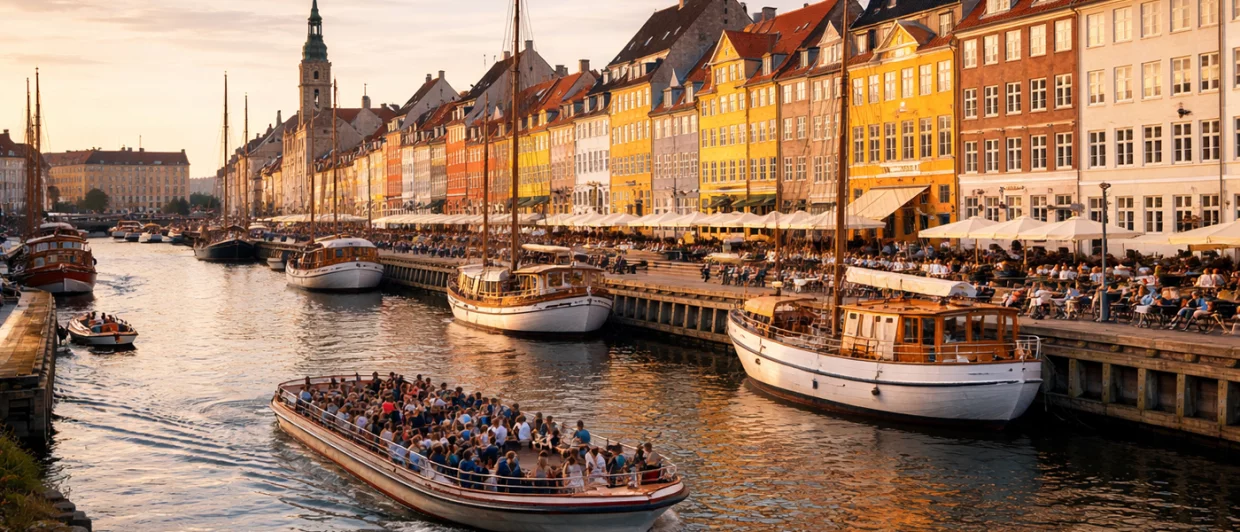
The iconic 17th-century harbor lined with colorful houses and cafés. Once rough and rowdy, today it’s Copenhagen’s postcard-perfect welcome.
Tivoli Gardens
Opened in 1843, this historic amusement park blends nostalgia, design, and modern entertainment right in the city center—and still works its magic on all ages.
The Little Mermaid
Small, subtle, and symbolic, this famous statue reflects Copenhagen itself—quietly iconic and best appreciated without rushing.
Final Summary
Copenhagen is not loud, not rushed, and not trying to impress you—and that’s exactly why it does. It’s a city where quality beats quantity, bicycles beat traffic, and good ideas seem to work. Visit Copenhagen, and you may start planning your return before you even leave.
Tags: Denmark • Germany • Scandinavia • Sweden • War • Weather