Location and Historical Background
Where rivers decide empires
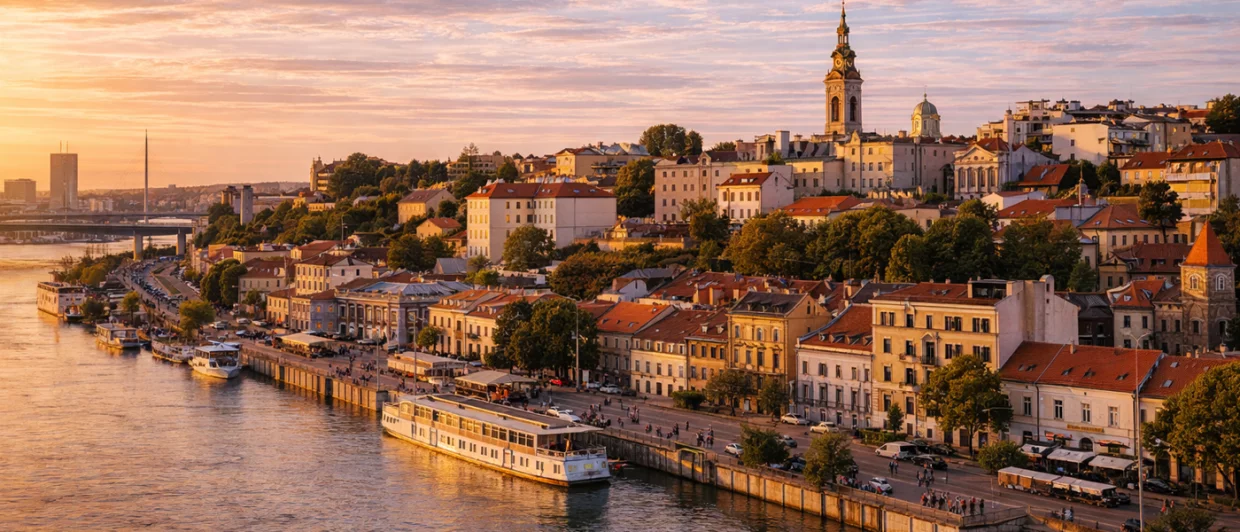
Belgrade occupies one of Europe’s most strategic locations: the meeting point of the Danube and the Sava. Flat plains meet river cliffs, creating a natural fortress that has attracted—and doomed—settlements for over two millennia. Even today, sunsets over the rivers feel symbolic, as if history itself pauses to look back.
From Singidunum to modern capital
Founded as Singidunum by Celtic tribes and later developed by the Romans in the 1st century AD, Belgrade has been continuously fought over ever since. First mentioned under its Slavic name Beograd (“White City”) in 878, it became the key frontier city between empires—Byzantine, Ottoman, and Habsburg alike.
Legend says Belgrade was built where “the world splits in two directions”—and the city has lived that truth ever since.
The Three Greatest Blows Belgrade Endured
1. Ottoman–Habsburg Wars (15th–18th centuries)
Between 1521 and 1791, Belgrade changed hands repeatedly during brutal wars between the Ottoman Empire and the Habsburg Monarchy. The city was destroyed and rebuilt multiple times, earning a reputation as Europe’s most contested fortress.
2. World War I Devastation (1914–1918)
As the capital of Serbia, Belgrade was heavily bombarded during World War I, suffering massive destruction and civilian losses. The city was nearly leveled—but emerged as the capital of the new Kingdom of Yugoslavia.
3. NATO Bombing (1999)
In 1999, during the Kosovo conflict, Belgrade was targeted in NATO air strikes. Infrastructure, bridges, and government buildings were damaged, leaving visible scars that still shape the city’s collective memory.
The Golden Age
Belgrade’s golden age arrived in the 1960s–1980s, when it became a confident, cosmopolitan capital of Yugoslavia—open to both East and West. Culture, music, architecture, and nightlife flourished, giving the city its enduring sense of creative rebellion.
Why Belgrade Is Worth Visiting Today
Today, Belgrade feels fearless. Its café culture is intense, its nightlife legendary, and its people famously direct and welcoming. History is everywhere—but never polished. Instead, Belgrade invites you to experience it honestly: through conversations, music, river views, and streets that never quite calm down.
In summary:
Belgrade doesn’t ask for sympathy. It dares you to keep up.
Tourist Information and Must-See Attractions
Estimated prices (per person):
- Average lunch: €8–12
- Mid-range accommodation (night): €50–85
- Local beer (0.5 l): €2.50–3.50
- Coffee: €2–2.50
Most interesting areas:
- Kalemegdan & Old Town
- Dorćol district
- Skadarlija bohemian quarter
Must-Visit Highlights
Kalemegdan Fortress
The soul of the city. Overlooking the confluence of the Danube and Sava, this fortress offers history, parks, and one of the most powerful viewpoints in Europe.
Skadarlija
A cobbled street lined with traditional restaurants, live music, and late-night energy. Equal parts nostalgia and celebration.
Temple of Saint Sava
One of the largest Orthodox churches in the world. Monumental, luminous, and deeply symbolic of Serbian identity.
Final Summary
Belgrade is not a city you visit politely—it grabs you by the sleeve, pours you a drink, and tells you its story until sunrise.