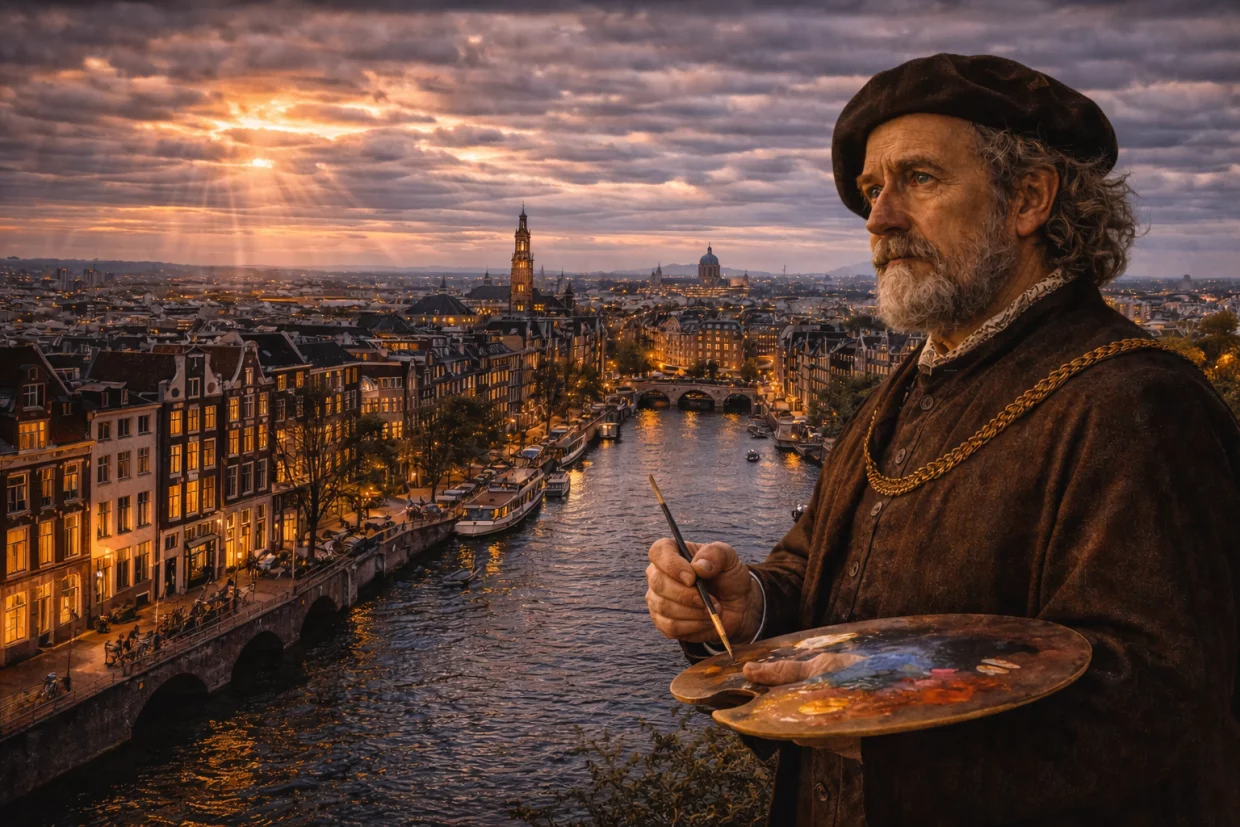
Location and Historical Background
Amsterdam lies in the western part of Netherlands, built on reclaimed land at the mouth of the Amstel River, surrounded by canals, polders, and low skies that seem designed for painters. Flat, watery, and meticulously engineered, the city still amazes visitors with how naturally it floats between land and water.
Amsterdam began as a small fishing village in the late 12th century, centered around a dam on the Amstel River—hence its name. Legend says the city survived floods by stubborn cooperation: when water rose, people didn’t flee, they organized. That instinct never left.
First great blow – Medieval floods and fires (13th–15th centuries):
Between the 13th and 15th centuries, Amsterdam was repeatedly hit by catastrophic floods and city-wide fires. Wooden houses, poor infrastructure, and the constant threat of water nearly erased the settlement multiple times. Each disaster forced smarter planning and stronger building methods.
Second great blow – French occupation and economic decline (1795–1813):
During the Napoleonic era, Amsterdam lost much of its global trading power. Blockades, war, and political subjugation weakened the economy, ending centuries of maritime dominance and pushing the city into a period of stagnation.
Third great blow – World War II occupation (1940–1945):
Nazi occupation brought repression, deportations, and the near-total destruction of Amsterdam’s Jewish community. The city survived physically, but the moral and human loss remains one of its deepest scars.
Golden Age – Dutch Golden Age (17th century):
Amsterdam’s golden age arrived in the 17th century, when it became the financial and trading capital of the world. Global commerce, banking, science, and art flourished. The canal ring, merchant houses, and institutions built during this era still define the city’s character and confidence.
Why Amsterdam Is Worth Visiting Today
Amsterdam today is effortlessly livable. Canals replace traffic, bicycles dominate streets, and culture is woven into daily life rather than staged for visitors. Museums rank among the world’s best, neighborhoods feel distinct and human-scale, and public space actually works.
What truly sets Amsterdam apart is mindset. The city trusts people—socially, politically, and culturally. That trust creates openness, innovation, and a calm confidence that visitors feel immediately. Amsterdam doesn’t try to impress; it simply functions beautifully.
Tourist Information and Must-See Places
- Average lunch: €12–18
- Average accommodation (mid-range hotel): €120–180 per night
- One beer: €5–6
- One coffee: €3–4
Most interesting areas:
Canal Ring (Grachtengordel), Jordaan, Museum Quarter
Canal Ring (UNESCO)
The iconic heart of Amsterdam. Elegant 17th-century canals, bridges, and merchant houses create one of the most harmonious urban designs in Europe.
Rijksmuseum
The Netherlands’ flagship museum, home to masterpieces by Rembrandt, Vermeer, and others. It explains Dutch history through art with clarity and confidence.
Anne Frank House
A deeply moving place that connects world history to one small space. Visiting offers emotional context that no textbook can provide.
Final Summary
Amsterdam doesn’t rush, lecture, or shout—it cycles past, nods politely, and gets on with life. Clever, tolerant, and quietly radical, it proves that freedom and structure don’t cancel each other out. If cities had personalities, Amsterdam would be the one calmly doing everything right without needing applause.
Tags: France • Netherland • War