Location and Historical Background
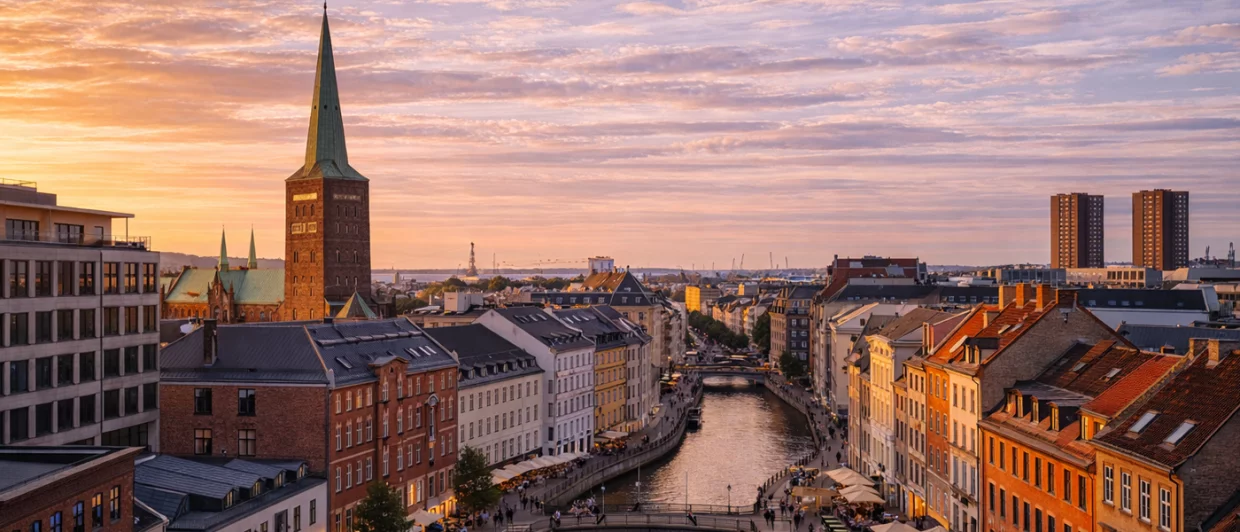
Aarhus lies on Denmark’s east coast, opening toward the Kattegat Sea, with rolling hills, forests, and fertile farmland behind it. The small Aarhus River runs straight through the city, shaping both its medieval core and modern waterfront life. Today, visitors are impressed by how seamlessly nature, design, and everyday life blend together.
Aarhus was founded by Vikings in the 8th century, making it one of the oldest cities in Denmark. Legend says it began as a strategic trading spot where ships, stories, and ambitions all docked together. By the Middle Ages, Aarhus had become an important religious and commercial center.
The Three Greatest Blows Aarhus Endured
The first major blow came during the Middle Ages, particularly in the 14th century, when plague outbreaks and economic decline hit the city hard. Population loss and reduced trade stalled growth for generations.
The second hardship arrived in the 17th century, when wars between Denmark and Sweden disrupted trade routes and drained resources. Aarhus lost influence and struggled to compete with larger ports.
The third challenge unfolded during World War II (1940–1945). Under German occupation, Aarhus experienced resistance activity, shortages, and political tension. Though spared from major destruction, the war years left lasting social and economic impacts.
The Golden Age of Aarhus
Aarhus’ golden age began in the late 19th century and accelerated after World War II. Industrial growth, port expansion, and—most importantly—the rise of education transformed the city. The late 20th and early 21st centuries cemented Aarhus as Denmark’s cultural and intellectual powerhouse, crowned by its role as European Capital of Culture in 2017.
Why Visit Aarhus Today
Today, Aarhus feels effortlessly modern. It offers world-class museums, a vibrant food scene, music festivals, innovative urban spaces, and beaches within cycling distance of the city center. The student population keeps the city energetic, while strong design traditions keep it visually striking.
In summary, Aarhus is Denmark in fast-forward: progressive but grounded, historic but experimental. It’s a city that feels alive, curious, and confidently itself—never trying to imitate Copenhagen, and never needing to.
Tourist Information and Must-See Sights
Estimated Prices (EUR):
- Average lunch: €14–18
- Mid-range hotel (per night): €120–180
- One beer (0.5 l): €7–9
- One coffee: €4–5.5
Most Interesting Areas for Tourists
The Latin Quarter, city center, waterfront districts, university areas, and nearby forests and beaches are the most attractive parts of Aarhus.
Three Must-Visit Attractions
ARoS Aarhus Art Museum
One of Scandinavia’s leading art museums, instantly recognizable by its rainbow panorama walkway offering sweeping views over the city. Art, architecture, and atmosphere meet perfectly here.
Den Gamle By
An open-air museum that recreates Danish urban life from different eras. Walking through it feels like time travel—without losing access to coffee.
Moesgaard Museum
Set in a dramatic modern building surrounded by forest and fields, this museum explores archaeology, anthropology, and Viking history in an immersive, story-driven way.
Final Summary
Aarhus is the city that proves second place can feel like first. It’s smart without being smug, creative without being chaotic, and historic without being stuck. Visit Aarhus, and you may start wondering why more cities don’t do it this well.
Tags: Denmark • Germany • Scandinavia • Sweden • War