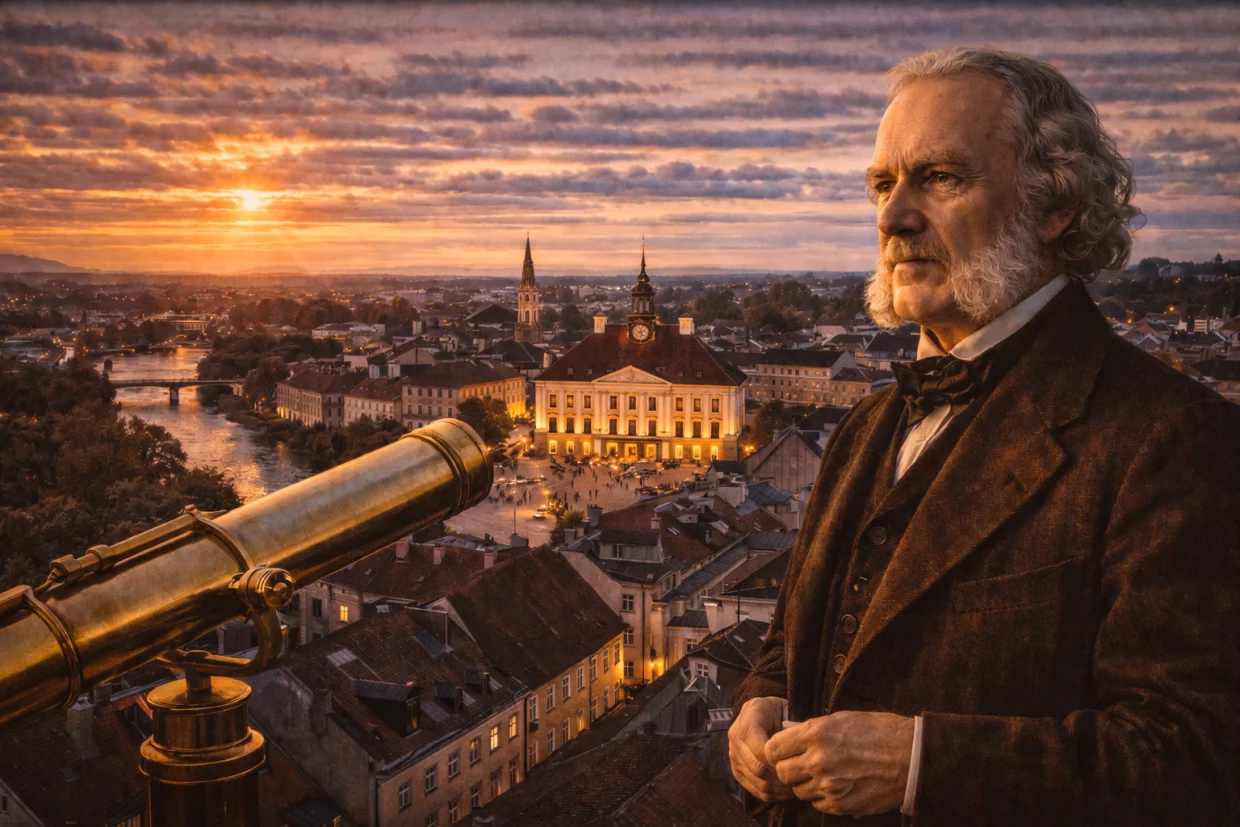
Location and Historical Background
Tartu lies peacefully along the Emajõgi River in southern Estonia, surrounded by gentle hills, forests, wetlands, and wide open landscapes that invite slow thinking and long walks. The river flows lazily through the city, giving it a calm, reflective atmosphere—perfect for a place that has spent centuries asking big questions.
The city’s roots go deep. Tartu was first mentioned in 1030, when it was conquered by Kievan Rus and known as Yuryev. According to local legend, the city was founded where wise men gathered to debate so fiercely that even the river stopped to listen. While history is less poetic, Tartu has always been a meeting point of cultures, trade routes, and ideas.
The Three Greatest Blows to the City
Medieval Conflicts and Destruction (13th century)
In 1224, Tartu was captured by German crusaders after fierce battles with local tribes. The city was repeatedly destroyed and rebuilt during clashes between Russian, German, and local powers. These early centuries were brutal, shaping Tartu into a resilient city accustomed to starting over.
The Great Fire of Tartu (1775)
In 1775, a catastrophic fire destroyed nearly the entire city, including wooden houses, churches, and public buildings. What survived was minimal. This disaster forced Tartu to rebuild almost from scratch, giving it a more orderly and neoclassical appearance that still defines much of the city today.
World War II Bombings (1944)
In August 1944, heavy bombing raids devastated Tartu, destroying large parts of the historic center and causing significant civilian casualties. Much of medieval Tartu was lost forever, leaving emotional scars and architectural gaps that the city has never fully tried to hide.
The Golden Age of Tartu
Tartu’s golden age began in 1632, with the founding of the University of Tartu by Swedish King Gustavus Adolphus. During the 18th and 19th centuries, the city became a major intellectual center of the Russian Empire. Scholars, writers, and scientists flourished here, turning Tartu into a birthplace of Estonian national identity and modern education.
Why Tartu Is Worth Visiting Today
Today, Tartu is youthful, creative, and deeply human-scaled. Nearly every third resident is a student, giving the city constant energy without chaos. Museums, street art, river promenades, music festivals, and thoughtful public spaces make Tartu feel alive but never overwhelming.
In summary, Tartu is a city for visitors who value substance over spectacle. It rewards those who slow down, listen, and engage. You don’t just see Tartu—you participate in it.
Tourist Information and Must-See Sights
Estimated Prices
- Average lunch: €10–13
- Mid-range hotel (per night): €80–120
- One beer (0.5 l): €4–5
- One coffee: €3–3.50
Tourists will enjoy the city center, riverfront areas, Toome Hill, and the university quarter.
Must-Visit Places
University of Tartu
Founded in 1632, it is one of Northern Europe’s oldest universities. Its main building and academic atmosphere define the city’s soul.
Toome Hill
A green, slightly mysterious park filled with ruins, monuments, and viewpoints. Ideal for quiet reflection and slow walks.
AHHAA Science Centre
A modern, interactive science museum that proves learning can be playful, loud, and fun—perfect for all ages.
Final Summary
Tartu won’t shout its importance at you—but if you listen closely, it might change the way you think. Come curious, leave smarter, and don’t be surprised if you start considering a PhD by the end of your visit.
Tags: Estonia • Germany • Russia • Scandinavia • Sweden • War