Location and Historical Background
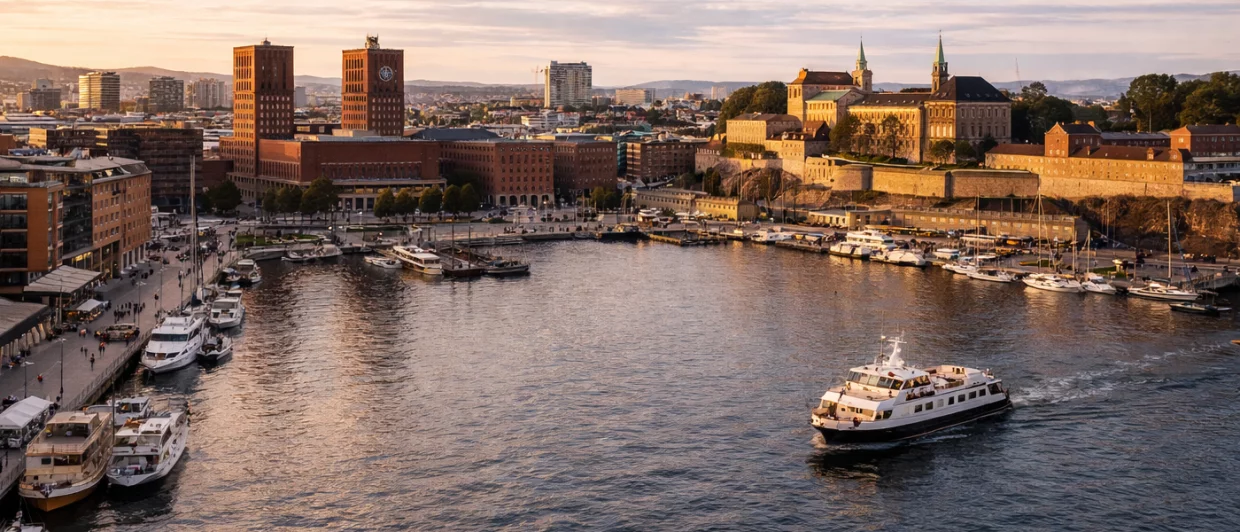
Oslo lies at the head of the Oslofjord, surrounded by forested hills, islands, and water on nearly every side. The city is wrapped by the Marka forests, legally protected wilderness that begins where tram lines end. Geography here is not decorative — it defines lifestyle, planning, and mentality. Nature is not escaped to; it is entered daily.
Founded around 1040, traditionally attributed to King Harald Hardrada, Oslo began as a modest trading and administrative settlement. Legend says the city burned so often in the Middle Ages that people assumed fire was part of its personality — an assumption history would repeatedly confirm.
Three Greatest Blows Oslo Endured
1. The Great Fire and Relocation (1624)
After a devastating fire in 1624, King Christian IV ordered the city rebuilt closer to Akershus Fortress and renamed it Christiania. Medieval Oslo was largely abandoned. The city lost its original core but gained a more controlled, fortified identity.
2. The Great Fire of 1858
Another massive fire destroyed large parts of the city center, forcing modernization. While tragic, it triggered urban reforms, better infrastructure, and safer construction — reshaping Oslo into a modern capital.
3. Nazi Occupation (1940–1945)
During World War II, Oslo was occupied by Nazi Germany. Political institutions were compromised, resistance was suppressed, and national trauma set deep roots. The city emerged intact physically, but marked psychologically.
The Golden Age of Oslo
Oslo’s golden age arrived in the late 19th and early 20th centuries, when Norway gained independence (1905) and Oslo became the undisputed national capital. Cultural institutions, architecture, and national identity flourished. A second, quieter golden age began in the late 20th century, fueled by oil wealth — though Oslo chose long-term planning over short-term excess.
Why Oslo Is Worth Visiting Today
Today, Oslo feels deliberate. Architecture is bold but restrained, public spaces are generous, and sustainability is treated as policy, not branding. Museums cluster beautifully along the waterfront, while neighborhoods remain livable rather than touristic.
Visitors experience a city where design, democracy, and nature coexist without tension. Swimming in the fjord, skiing in winter, hiking year-round, and cultural immersion all feel equally valid — because they are.
In summary, Oslo is ideal for travelers who want clarity, balance, and a capital that prioritizes quality of life over theatrical history.
Tourist Information and Must-See Sights
Estimated Prices (EUR):
- Average lunch in a restaurant: 18–25 €
- Mid-range hotel per night: 140–220 €
- One beer (0.5 l): 9–11 €
- One coffee: 4.5–6.5 €
Most Interesting Areas:
- Waterfront and Bjørvika
- Grünerløkka
- Frogner and surrounding parks
Top 3 Must-Visit Attractions
The Viking Ship Museum / Museum of the Viking Age
Home to some of the world’s best-preserved Viking ships. Minimalist presentation, maximum impact — pure Norwegian heritage.
Oslo Opera House
A modern architectural landmark rising from the fjord. Walkable roof, public accessibility, and strong symbolism of open culture.
Vigeland Sculpture Park
An open-air gallery of over 200 sculptures exploring the human condition. Strange, powerful, and unforgettable — art without walls.
Final Summary
Oslo doesn’t overwhelm — it optimizes. A capital where forests are constitutional, wealth is understated, and progress happens quietly, it proves that the future doesn’t need to shout if it’s well planned.
Tags: Germany • Norway • Scandinavia • War