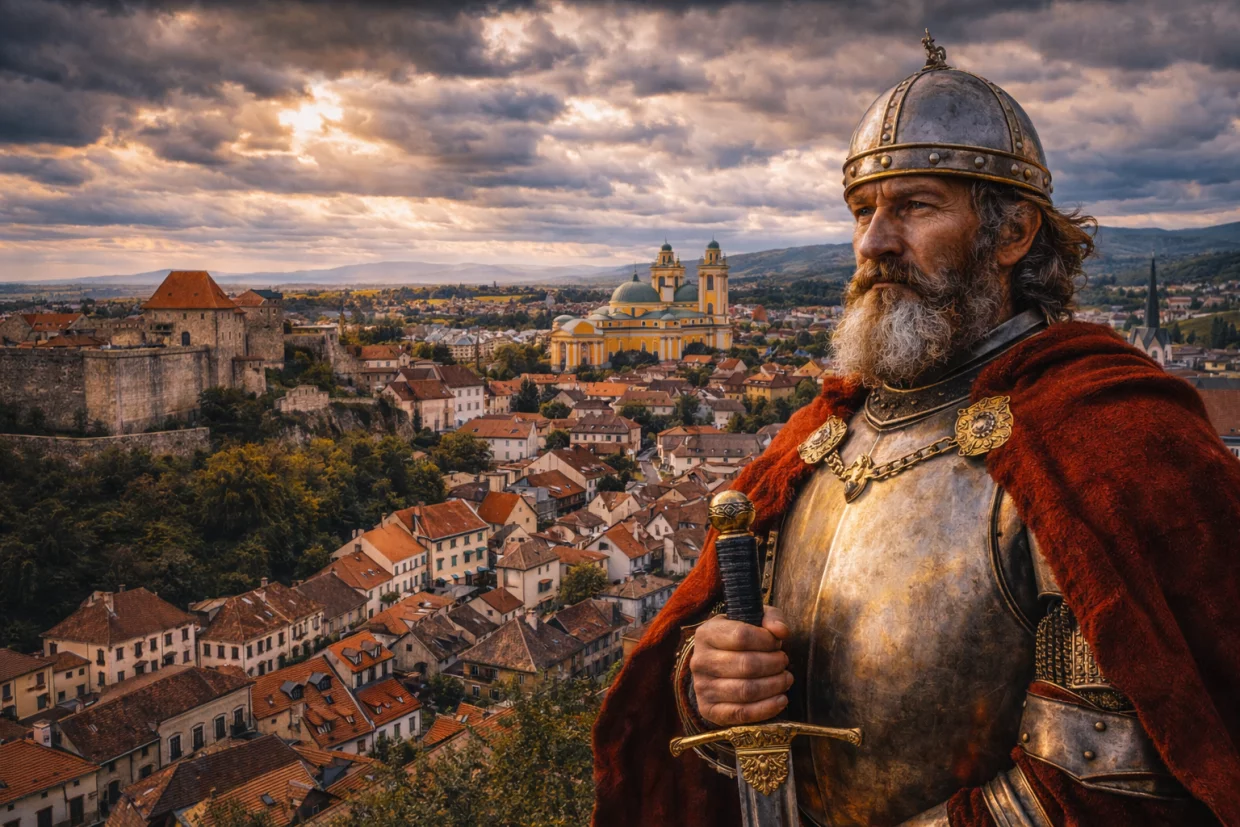
Location & Historical Background
Romantic Setting
Eger lies at the edge of the Bükk Mountains in northern Hungary, surrounded by rolling hills, vineyards, and forested slopes. The Eger Stream winds quietly through the city, softening its historic stone and pastel façades. Today, visitors are impressed by the harmony between compact urban elegance and the green countryside just beyond the rooftops.
Origins & Foundation
Eger’s origins reach back to the early Middle Ages, with its first recorded mention in 1009, when it became the seat of a bishopric. Legend says the town grew where monks found fresh water and fertile land—two things guaranteed to attract both settlers and trouble. Religious importance quickly gave Eger political and cultural weight.
The Three Greatest Blows
The Ottoman Siege of 1552
In 1552, Eger entered legend when a vastly outnumbered Hungarian garrison successfully defended the castle against Ottoman forces. Though victorious, the city suffered heavy damage, loss of life, and years of tension that followed the celebrated stand.
Ottoman Occupation (1596–1687)
Despite earlier heroism, Eger fell to the Ottomans in 1596 and remained under their rule for over 90 years. Churches were converted, fortifications reshaped, and the city’s Christian institutions suppressed, leaving deep cultural and architectural scars.
World War II Damage (1944)
In 1944, Eger suffered bombing and military disruption as front lines moved through Hungary. While the historic core survived relatively well, infrastructure damage and civilian hardship marked the city’s modern trauma.
The Golden Age
Eger’s golden age arrived in the 18th century, after the Ottoman withdrawal. Under strong ecclesiastical leadership, the city was rebuilt in rich Baroque style. Churches, palaces, and schools flourished, transforming Eger into one of Hungary’s most beautiful historic cities.
Why Visit the City Today
Today, Eger is atmospheric, walkable, and indulgent in the best ways. You can explore a heroic castle, soak in thermal waters, admire ornate architecture, and end the day in historic wine cellars—all without leaving the city. It’s a destination that rewards curiosity and unhurried wandering.
Tourist Information & Must-See Places
Practical Information (Estimated Averages)
- Average lunch: €8–12
- Average accommodation (per night): €70–120
- One beer: €2–3
- One coffee: €2–3
Most Interesting Parts of the City
Historic center, Castle Hill, Szépasszony-völgy (Valley of the Beautiful Woman), and the thermal bath district.
Top 3 Must-See Attractions
Eger Castle
The city’s defining landmark, symbol of the 1552 siege, offering panoramic views and exhibitions on military and local history.
Thermal Baths of Eger
A long-standing spa tradition combining Ottoman-era heritage with modern wellness facilities.
Szépasszony-völgy (Valley of the Beautiful Woman)
A unique wine district carved into hillsides, home to dozens of cellars serving Eger’s famous red and white wines.
Final Summary
Eger doesn’t just remember history—it toasts to it. Come for the legends and architecture, stay for the baths and wine, and leave convinced that bravery ages beautifully when stored in stone and oak barrels.
Tags: Hungary