Location & Historical Background
Romantic Setting
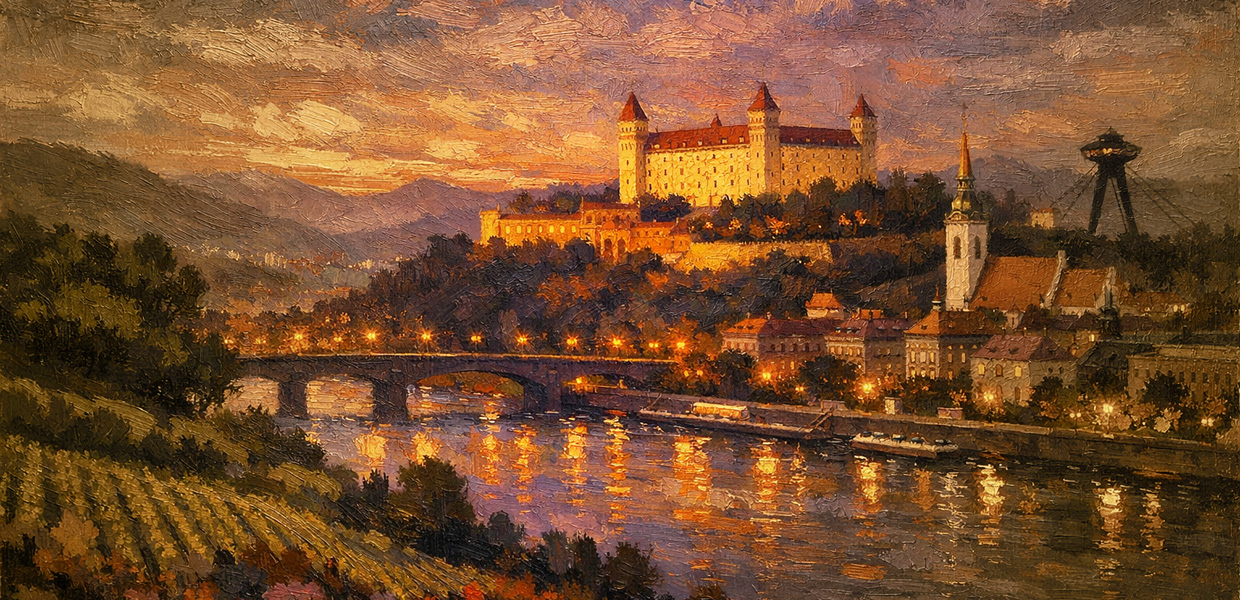
Bratislava stretches along the Danube River at the foot of the Little Carpathians, right where Slovakia meets Austria and Hungary. Vineyards climb nearby hills, riverbanks open into promenades, and the old town nestles beneath a commanding castle. Today, visitors are impressed by how effortlessly the city blends nature, history, and everyday urban life.
Origins & Foundation
Human settlement here dates back thousands of years, but Bratislava entered written history during Roman times as a frontier outpost near Carnuntum. The city later flourished in the Middle Ages, with its first major records appearing in the 10th century. Legend claims Bratislava was founded where traders realized they could argue in three languages at once—and still do good business.
The Three Greatest Blows
Mongol Invasion Aftermath (1241–1242)
The Mongol invasion of 1241–1242 devastated the wider region. Although the fortified hill survived, surrounding settlements were destroyed, prompting major fortification efforts and reshaping the city’s medieval defenses.
Napoleonic Occupation and Bombardment (1809)
In 1809, Napoleonic forces occupied Bratislava and bombarded the castle, causing significant damage. The event marked the symbolic end of the city’s role as a coronation capital and began a period of political decline.
World War II and Political Upheaval (1939–1945)
Between 1939 and 1945, Bratislava experienced occupation, deportations of its Jewish population, and later liberation. Physical damage was limited compared to other capitals, but the social and demographic impact was profound.
The Golden Age
Bratislava’s golden age spanned the 16th to 18th centuries, when it served as the coronation city of the Kingdom of Hungary. Kings were crowned here, diets convened, and aristocrats built palaces—leaving behind an architectural legacy that still defines the old town.
Why Visit the City Today
Today, Bratislava is lively, approachable, and pleasantly human-scaled. Its historic center, vibrant food scene, riverside walks, and creative neighborhoods make it ideal for short stays and relaxed exploration. Add easy access to Vienna, wine country, and nature, and Bratislava becomes a capital that rewards curiosity without exhausting it.
Tourist Information & Must-See Places
Practical Information (Estimated Averages)
- Average lunch: €9–13
- Average accommodation (per night): €90–150
- One beer: €2.50–3.50
- One coffee: €2.50–3.50
Most Interesting Parts of the City
Old Town (Staré Mesto), Castle Hill, Danube riverfront, and the modern districts across the river.
Top 3 Must-See Attractions
Bratislava Castle
A dominant hilltop landmark offering panoramic views of three countries and a deep dive into the city’s royal and political past.
Old Town (Staré Mesto)
A compact historic core filled with palaces, squares, cafés, and statues that balance imperial elegance with playful modern spirit.
Danube Riverfront & UFO Bridge
A lively promenade where history meets modern design, crowned by the iconic UFO observation deck above the river.
Final Summary
Bratislava doesn’t try to be grand—it simply remembers when it was. Come for the history and location, stay for the charm and humor, and leave realizing that sometimes the smallest capitals have the most personality.
Tags: Austria • Carpathians • Hungary • Slovakia