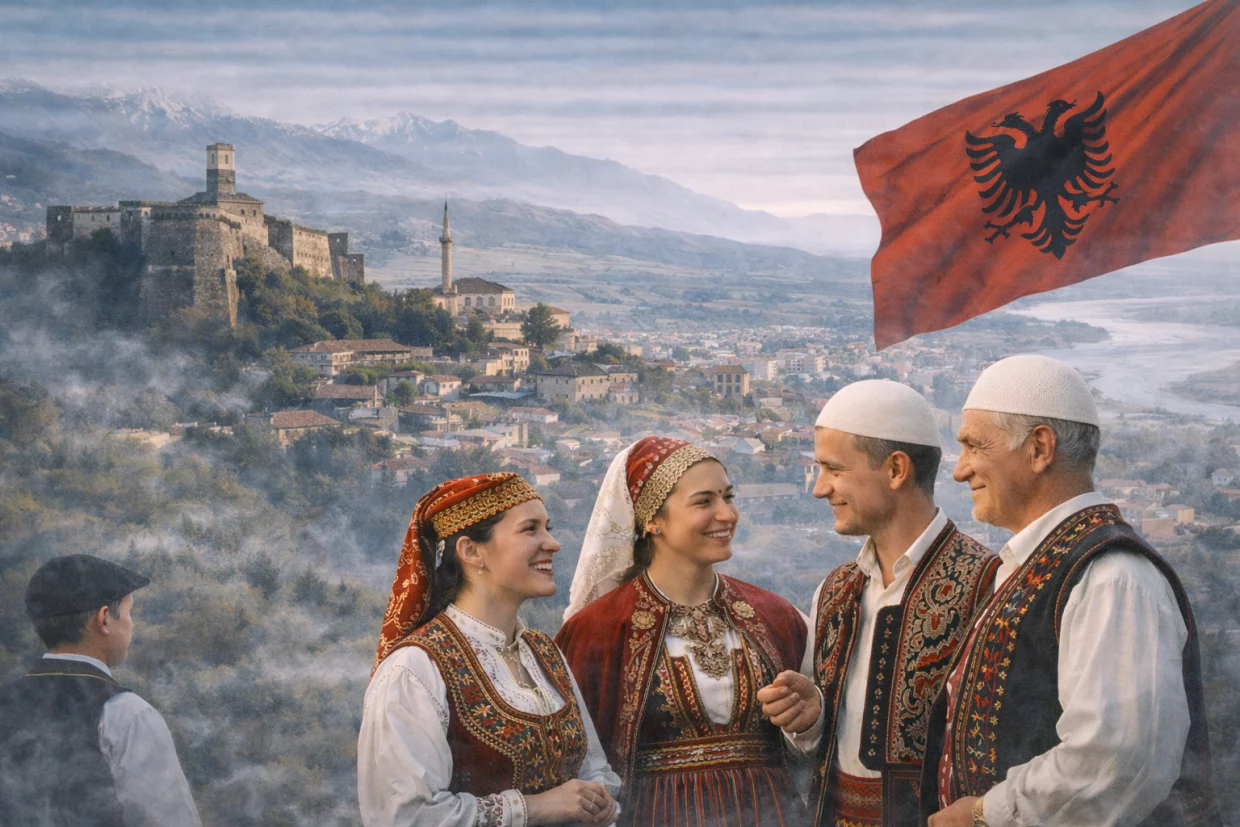
What’s the problem right now?
Albania is moving fast — and unevenly.
It has:
- strong economic momentum
- growing tourism
- clear EU ambition
- young, adaptable population
But also:
- weak institutions
- corruption fatigue
- massive emigration
- fragile rule of law
Albania isn’t stuck.
It is catching up at full speed.
The risk isn’t stagnation —
it’s losing balance while running.
How history taught Albania to distrust everyone equally
Albania’s modern history is extreme even by European standards.
Under Enver Hoxha, isolation wasn’t policy — it was ideology.
Borders closed.
Allies rotated.
Paranoia became governance.
Bunkers replaced bridges. Self-reliance replaced cooperation.
The lesson absorbed:
The world is dangerous. Depend only on yourself.
When communism collapsed, Albania didn’t slowly open. It burst.
Institutions weren’t reformed — they were invented.
Openness, speed, and fragile foundations
Modern Albania embraced the outside world with urgency.
Strengths:
- social flexibility
- entrepreneurial instinct
- cultural openness
- willingness to adapt
Limits:
- informal power networks
- weak enforcement
- personalization of politics
- uneven development
People move fast because waiting feels risky.
Rules are flexible because rules once imprisoned.
Albania learned freedom quickly —
but trust takes longer.
The limits of catching up mentality
Catching up motivates growth.
It also justifies shortcuts.
Albania’s challenges:
- building institutions faster than growth
- turning tourism into sustainability
- convincing citizens to stay
- aligning ambition with capacity
When everyone is in a hurry, long-term thinking feels optional.
Albania doesn’t lack energy. It lacks institutional patience.
What could realistically help?
Option 1: Slow down where trust matters most
Speed is valuable —
except in justice and governance.
Pros: credibility
Cons: frustration
Option 2: Treat EU accession as discipline, not reward
Europe isn’t the finish line.
It’s the training program.
Pros: structure
Cons: effort
Option 3: Turn diaspora into partners, not exits
Leaving shouldn’t be the only success strategy.
Pros: skills, capital
Cons: reform pressure
Final thought
Albania escaped isolation by moving forward fast. Its next challenge is learning when speed must give way to structure.
In a Europe shaped by long memory and slow trust, Albania stands out as a reminder that freedom can arrive suddenly — but stability has to be built deliberately.
And if Albania gets that balance right, it may surprise a continent that still remembers only its bunkers — not its potential.
Tags: Albania