2. Location and Historical Background
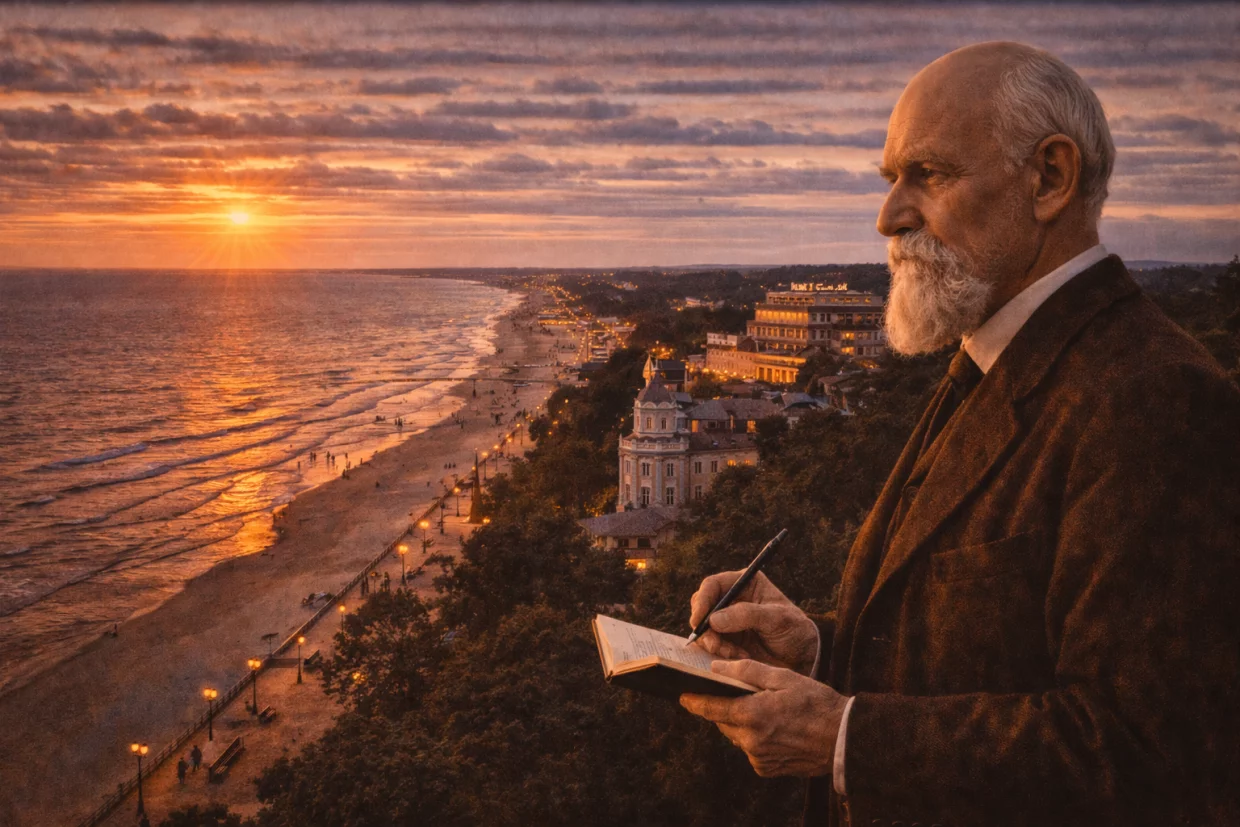
Jūrmala stretches along a 33-kilometer-long strip of white sand beach on the Gulf of Riga, bordered on one side by the Baltic Sea and on the other by pine forests and the Lielupe River. The terrain is flat, airy, and fragrant with sea salt and resin. Today, visitors are impressed by the endless beaches, wooden villas, spa hotels, and the calm rhythm that seems immune to hurry.
Jūrmala as a unified city officially emerged in 1959, but its individual resort districts—such as Majori, Dzintari, and Bulduri—began developing in the 19th century. Legend has it that the town was born the moment someone realized that pine forests, sea air, and boredom together create excellent health outcomes.
The Three Greatest Blows to the City
World War I Destruction (1914–1918)
During World War I, many of Jūrmala’s wooden villas and resort facilities were destroyed or abandoned. Tourism collapsed, infrastructure suffered, and the once-flourishing spa culture fell silent for several years.
World War II and Occupations (1940–1945)
Jūrmala endured Nazi and Soviet occupations, deportations, and population loss. Jewish residents were murdered during the Holocaust, and the city’s social fabric was deeply damaged. Many historic buildings were repurposed or neglected.
Soviet-Era Overdevelopment (1950s–1980s)
While Jūrmala became a major Soviet resort, mass tourism and standardized construction threatened its architectural heritage. Large sanatoriums replaced some historic villas, altering parts of the city’s original character.
The Golden Age of Jūrmala
Jūrmala’s golden age began in the late 19th and early 20th centuries, when it developed as a fashionable resort for Baltic German and Russian elites. Elegant wooden villas, spas, and cultural life flourished. Sea bathing, concerts, and refined leisure defined the city’s identity—an image that still shapes Jūrmala today.
Why Jūrmala Is Worth Visiting Today
Modern Jūrmala offers space, air, and calm—rare luxuries in today’s travel world. Visitors come for beach walks, spa treatments, cycling routes, forest trails, and cultural events. It’s close enough to Riga for easy access, yet distant enough to feel like a true escape.
In summary, Jūrmala is about restoration rather than excitement. It doesn’t entertain—it soothes.
Tourist Information and Must-See Sights
Estimated Prices
- Average lunch: €12–16
- Mid-range hotel (per night): €90–150
- One beer (0.5 l): €5–6
- One coffee: €3.50–4.50
The most popular areas include Majori, Dzintari, Bulduri, and the central beach zones.
Must-Visit Places
Jūrmala Beach
A wide, clean, and seemingly endless sandy beach—perfect for long walks, sunsets, and summer swims.
Dzintari Forest Park
A peaceful forest park with walking paths, observation tower, and family-friendly attractions.
Jomas Street
The social heart of Jūrmala, lined with cafés, shops, and seasonal events—lively without being overwhelming.
Final Summary
Jūrmala doesn’t promise transformation—but it delivers balance. Come for the sea, stay for the air, and leave with the quiet realization that doing less can feel like doing everything right.