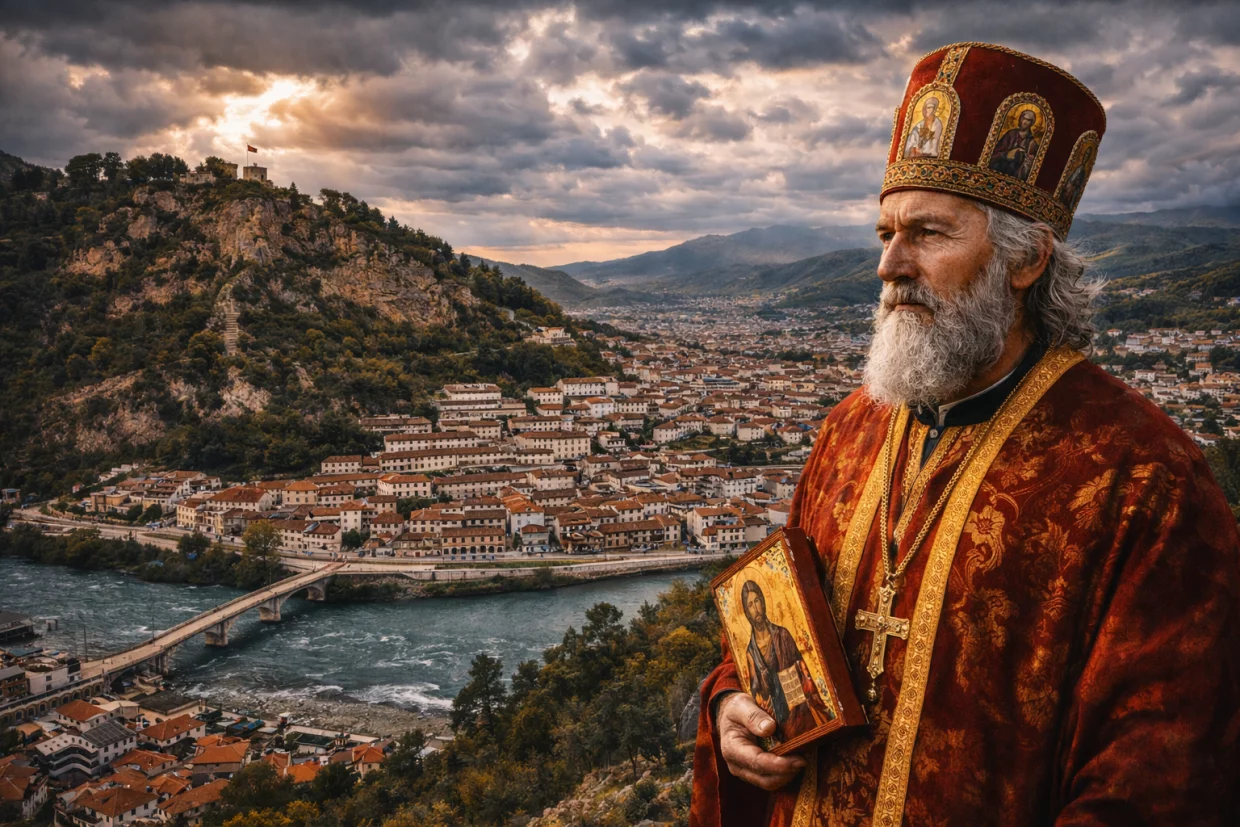
Location and Historical Background
Set in a dramatic valley along the Osum River and guarded by the slopes of Mount Tomorr, Berat enjoys one of the most romantic natural settings in southern Albania. Olive groves, vineyards, and rocky hills surround the city, while the river reflects rows of Ottoman houses stacked like steps toward the sky. Today, Berat impresses visitors with its harmony—between nature and architecture, silence and life, past and present.
Berat’s origins stretch back to antiquity. Founded in the 4th century BCE as an Illyrian settlement and later known as Antipatreia, the city gained importance under Roman and Byzantine rule. A local legend claims that the hills around Berat argued over who should protect the city—so they both did, creating the fortress and the river valley that define it today.
First great blow – Byzantine and Bulgarian wars (9th–11th centuries):
During the medieval period, Berat stood at a strategic crossroads and paid the price. Between the 9th and 11th centuries, it was repeatedly contested by Byzantine and Bulgarian forces. Sieges, population displacement, and economic decline followed each shift in power, leaving scars that reshaped the city’s defenses and fortifications.
Second great blow – Ottoman conquest (1417):
The Ottoman takeover in 1417 brought profound transformation. While the city eventually prospered, the transition was harsh: resistance was crushed, Christian institutions weakened, and parts of the city were destroyed or repurposed. Entire neighborhoods were rebuilt, forever altering Berat’s cultural and architectural identity.
Third great blow – 20th century wars and communist neglect:
Berat survived World War II with limited destruction, but the post-war communist era proved damaging in quieter ways. From 1944 to 1991, investment stalled, private property vanished, and many historic buildings decayed due to neglect. The city survived—but just barely.
Golden Age – Ottoman prosperity (18th–19th centuries):
Berat’s golden age arrived during the 18th and early 19th centuries, when it became a thriving administrative, religious, and commercial center. Trade flourished, crafts evolved, and wealthy families built the iconic multi-windowed houses that earned Berat its famous nickname: the City of a Thousand Windows.
Why Berat Is Worth Visiting Today
Today, Berat is one of the most atmospheric cities in the Balkans. It offers something rare: beauty without noise. Wandering its cobbled streets feels intimate and personal, as if the city is letting you in on a secret. Museums, churches, mosques, and hidden courtyards sit within walking distance, while the surrounding countryside invites slow exploration.
What truly makes Berat special is its emotional weight. This is not a city built for entertainment—it’s built for reflection. Visiting Berat feels like stepping into a paused moment in time, where history isn’t displayed behind glass but lived quietly in stone, wood, and daily routine.
Tourist Information and Must-See Places
- Average lunch: €6–9
- Average accommodation (mid-range hotel): €45–75 per night
- One beer: €2–3
- One coffee: €1–1.50
Most interesting areas:
Mangalem Quarter, Gorica Quarter, Berat Castle area
Berat Castle (Kala)
Still inhabited today, this massive hilltop fortress offers panoramic views and a deep dive into the city’s layered past. Inside its walls, you’ll find churches, ruins, and homes where families have lived for generations.
Mangalem Quarter
The iconic face of Berat. Rows of white Ottoman houses with symmetrical windows cascade down the hill toward the river. It’s one of the most photogenic historic districts in Southeast Europe.
Onufri Iconography Museum
Located inside the cathedral within the castle, this museum showcases vivid Orthodox icons by master painter Onufri. It’s a cultural highlight that reveals Berat’s spiritual and artistic depth.
Final Summary
Berat doesn’t shout for attention—it simply waits, confident that you’ll notice. It’s a city where windows outnumber words, silence speaks volumes, and history feels surprisingly alive. If Tirana is Albania’s pulse, Berat is its memory—and every traveler should experience both.