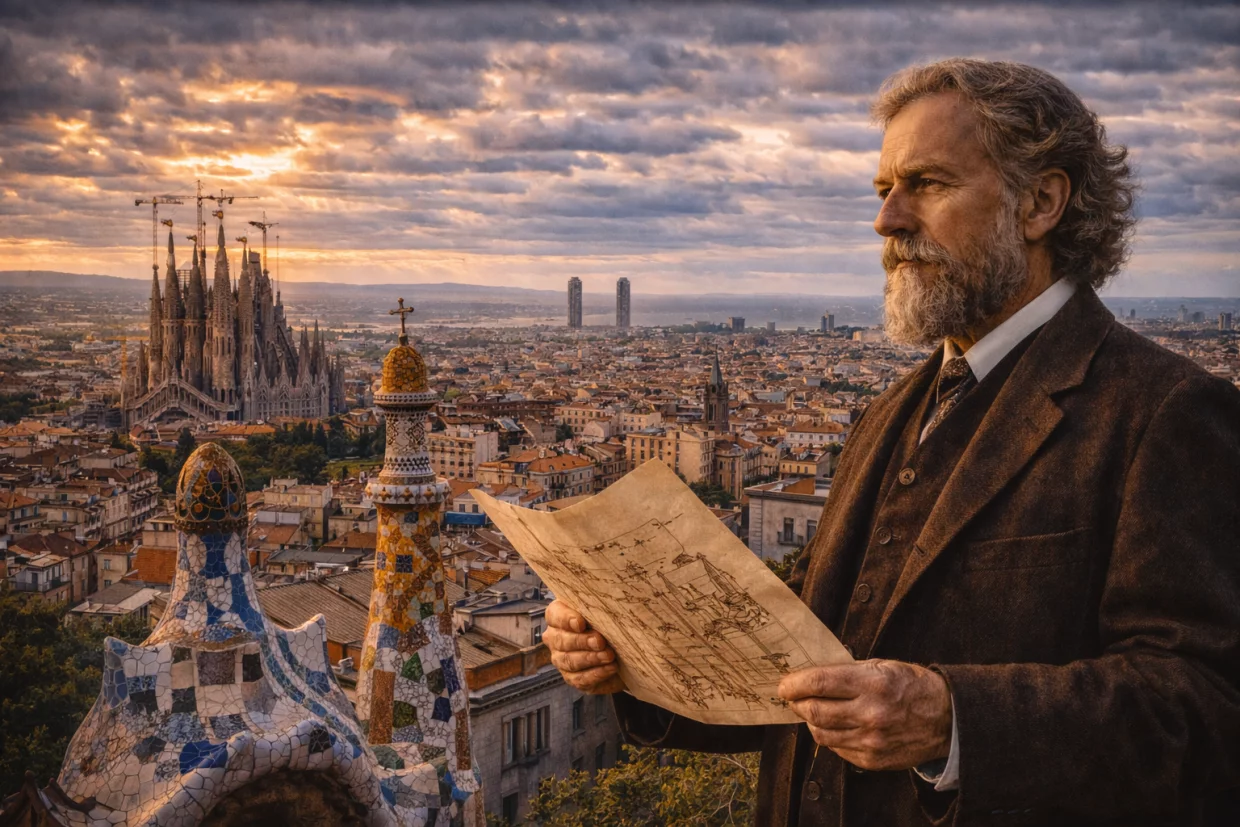
Location and Historical Backdrop
Barcelona stretches along the Mediterranean coast, framed by the sea on one side and the gentle hills of the Collserola range on the other. Palm-lined promenades, urban beaches, and constant sea air give the city a relaxed confidence—like it knows it’s beautiful and doesn’t need to prove it. Today, visitors are stunned by the blend of ancient stone walls, whimsical modernism, and a coastline that feels inseparable from city life.
The city’s roots reach back over 2,000 years to Roman Barcino, founded in the 1st century BC. A popular legend claims the city was founded by Hercules himself—because apparently even mythological heroes needed a seaside base. Over centuries, Barcelona grew into a powerful medieval port, later becoming the beating heart of Catalonia’s trade, culture, and political ambition.
The Three Biggest Blows Barcelona Endured:
- The Siege of 1714 (War of the Spanish Succession)
After a brutal siege ending on September 11, 1714, Barcelona fell to Bourbon forces. Catalan institutions were abolished, city walls reinforced for control, and autonomy crushed. The date is still remembered today as a symbol of loss—and resistance. - The Spanish Civil War (1936–1939)
Barcelona was a Republican stronghold and suffered heavy aerial bombardment. Factories, homes, and morale were destroyed as civilians took the brunt of the violence. By 1939, the city was deeply scarred and entered decades of repression under Franco. - Industrial Decline and Urban Decay (Mid-20th Century)
Rapid industrialization followed by decline left many districts overcrowded, polluted, and neglected. By the 1970s, parts of Barcelona were crumbling—setting the stage for one of Europe’s most impressive urban reinventions.
The Golden Age of Barcelona
Barcelona’s golden era arrived twice: first during medieval maritime expansion, and again in the late 19th and early 20th centuries with the rise of Catalan Modernism. Wealth from trade and industry funded radical architecture, bold ideas, and cultural confidence—most famously embodied by Antoni Gaudí. The 1992 Olympic Games then launched Barcelona onto the global stage, transforming it into a modern world city.
Why Barcelona Is Worth Visiting Today
Barcelona offers rare balance: culture without stiffness, beaches without boredom, and nightlife without emptiness. You can swim in the morning, explore Roman ruins by noon, admire surreal architecture in the afternoon, and eat world-class food long after sunset. Every neighborhood feels distinct, yet all pulse with creativity and pride.
In short, Barcelona is a city that lives outward. It doesn’t hide behind monuments—it spills into the streets, onto the beaches, and straight into your memory.
Tourist Information and Must-See Goals
Average Costs (Estimated):
- Average lunch: €13–16
- Mid-range accommodation (per night): €100–150
- One beer: €3–5
- One coffee: €2–3
Most Interesting Areas for Visitors:
El Born, Gothic Quarter, Eixample, Gràcia, Barceloneta.
Three Must-Visit Highlights:
- Sagrada Família
An architectural masterpiece still under construction after more than a century. Strange, spiritual, overwhelming—and absolutely unforgettable. - Park Güell
A colorful dreamscape overlooking the city, blending nature, imagination, and panoramic views that justify every uphill step. - La Rambla
Chaotic, iconic, touristy—and still essential. A living artery of Barcelona where street life never stops performing.
Final Summary
Barcelona is the kind of city that makes you consider “accidentally” missing your return flight. It’s expressive, imperfect, sun-drenched, and emotionally loud—and that’s exactly why people fall in love with it.
Tags: Spain