Location and Historical Background
Geographic Setting and First Impressions
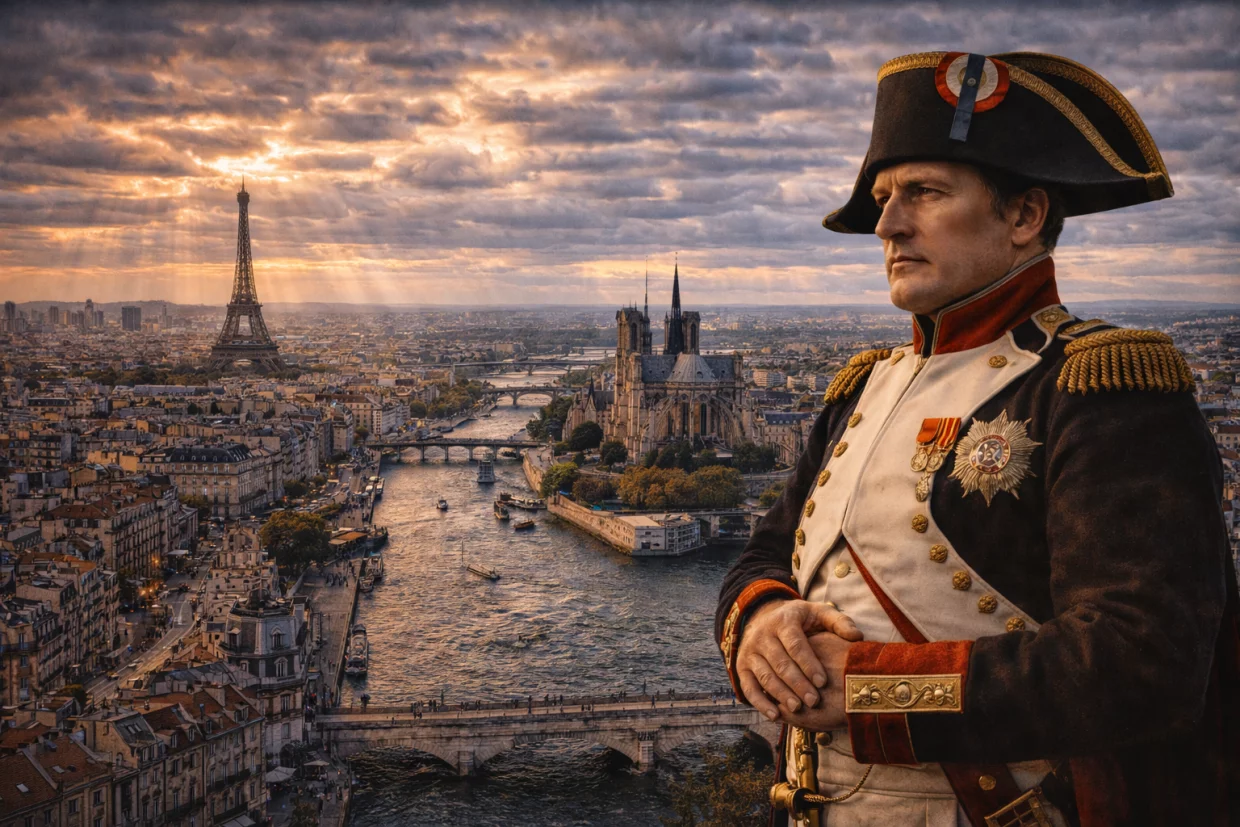
Paris lies gracefully along the River Seine in northern France, surrounded by gentle plains rather than dramatic mountains. Its power never came from natural defenses but from ideas, people, and an uncanny ability to reinvent itself. Today, Paris impresses with its grand boulevards, limestone architecture glowing at sunset, and a rhythm that flows somewhere between chaos and poetry.
Origins and Early History
The city traces its origins to a Celtic tribe, the Parisii, who settled on the Île de la Cité around the 3rd century BCE. According to a playful legend, they chose the island because it flooded just enough to discourage enemies and unwanted relatives. Romans later conquered the settlement, calling it Lutetia, and by the Middle Ages, Paris had already become a major center of learning, religion, and royal power.
The Three Greatest Blows to Paris
1. The Black Death (1348–1350)
The plague struck Paris brutally in the mid-14th century, killing an estimated one third of the population. Streets emptied, trade collapsed, and fear ruled daily life. Entire neighborhoods were abandoned, and mass graves appeared outside city walls. Paris survived, but its social fabric was permanently altered.
2. The French Revolution (1789–1799)
While ultimately shaping modern France, the Revolution was devastating for Paris. In 1789, violence erupted with the storming of the Bastille. The following years brought executions, mob rule, famine, and political terror. Churches were desecrated, aristocratic mansions destroyed, and blood quite literally flowed through the streets.
3. World War II Occupation (1940–1944)
Paris fell to Nazi Germany in June 1940. Though spared large-scale destruction, the city endured occupation, censorship, deportations, and hunger. Jewish citizens were arrested and sent to concentration camps. Liberation came in August 1944, restoring freedom but leaving deep emotional scars.
The Golden Age of Paris
Paris’s golden age spanned roughly from the mid-19th century to the early 20th century. Under Napoleon III and Baron Haussmann, medieval streets were transformed into wide boulevards. Industry, banking, art, and science flourished. Artists like Monet, writers like Hemingway, and inventors from across Europe turned Paris into the world’s cultural capital. The city was rich not only in money, but in ideas.
Why Paris Is Worth Visiting Today
Paris today is a layered masterpiece. It offers world-class museums, iconic architecture, neighborhoods that feel like villages, and cuisine that turns everyday meals into rituals. Whether you come for fashion, food, history, literature, or simple wandering, Paris adapts to your curiosity. Beyond the postcard landmarks, the city rewards slow exploration – a bakery at dawn, a bookstore by the Seine, a quiet square at dusk. Paris does not try to impress you; it assumes it already has.
Tourist Information and Key Attractions
Practical Tourist Costs (Estimated Averages)
- Average lunch: 15–20 EUR
- Average dinner: 25–35 EUR
- Hotel (mid-range, double room): 120–180 EUR per night
- Beer (0.5 l): 7–9 EUR
- Coffee (espresso): 2.5–4 EUR
Most Interesting Areas of the City
The historic center around the Seine, Montmartre with its artistic soul, the elegant Left Bank, and the modern districts near La Défense each show a different face of Paris.
Three Must-See Attractions
The Eiffel Tower
Originally built for the 1889 World’s Fair, this iron giant was once hated by Parisians. Today it is the city’s unmistakable symbol, offering breathtaking views and a reminder that bold ideas often age well.
The Louvre Museum
Once a royal palace, now the world’s largest art museum. From the Mona Lisa to ancient civilizations, the Louvre is less a museum and more a journey through human creativity.
Montmartre and Sacré-Cœur
A hilltop neighborhood where artists, poets, and rebels once lived cheaply and dreamed loudly. The white basilica crowns the city with one of the best panoramic views Paris has to offer.
Final Summary
Paris is beautiful, exhausting, inspiring, expensive, unforgettable, and occasionally infuriating – sometimes all in one afternoon. It is a city that does not apologize for being itself. If you fall in love with Paris, it will never quite love you back – but it will give you memories worth carrying forever.