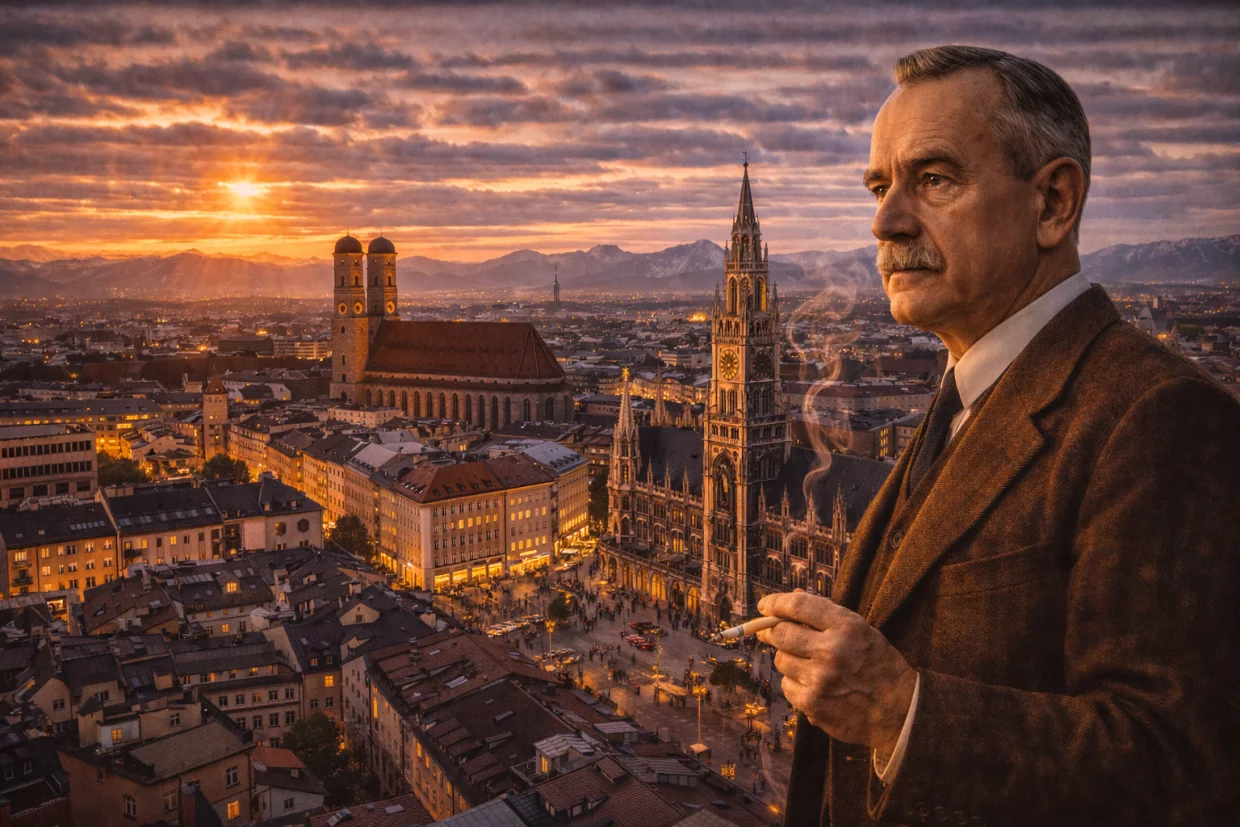
Location and Historical Background
Munich lies in southern Germany on the elevated plains of Upper Bavaria, with the Alps rising dramatically on the horizon and the Isar River cutting a green ribbon through the city. Meadows, forests, lakes, and mountains surround it, giving Munich a fresh, open feeling despite its size. Today, visitors are impressed by its cleanliness, grand architecture, efficient infrastructure, and the ease with which nature and city life blend.
Munich was first mentioned in 1158, when Henry the Lion established a settlement near a bridge over the Isar. Legend has it the city was founded after monks charged illegal tolls—and Henry responded by destroying the old bridge and building his own. The name München itself comes from those monks (Mönche), proving that even rebellion can become branding.
The Three Greatest Blows to the City
The Thirty Years’ War and Plague (1618–1648)
During the Thirty Years’ War, Munich suffered occupation threats, economic strain, and a devastating plague outbreak in 1634, which killed nearly a third of the population. The city survived, but fear and loss shaped its urban and religious character for generations.
World War II Bombing (1942–1945)
Munich was heavily bombed during World War II, with more than 50% of the city destroyed by 1945. Historic buildings, residential areas, and infrastructure lay in ruins. Post-war reconstruction was extensive, deliberate, and conservative—aiming to restore identity rather than reinvent it.
The 1972 Olympic Tragedy
During the 1972 Summer Olympics, Munich was shaken by a terrorist attack that killed eleven Israeli athletes. The event traumatized the city and permanently changed global security standards for international events.
The Golden Age of Munich
Munich’s golden age unfolded in the 19th century, particularly under King Ludwig I of Bavaria. The city became a major center of art, science, architecture, and culture. Grand boulevards, museums, and institutions were built, transforming Munich into one of Europe’s most refined capitals—while still leaving room for beer gardens.
Why Munich Is Worth Visiting Today
Modern Munich offers exceptional quality of life. World-class museums, historic squares, cutting-edge technology firms, and legendary beer halls coexist effortlessly. You can attend an opera, hike in the Alps, swim in an urban river, and drink a liter of beer—all in the same day.
In summary, Munich is a city that proves prosperity doesn’t have to feel aggressive. It’s orderly without being cold, proud without arrogance, and traditional without being stuck in the past.
Tourist Information and Must-See Sights
Estimated Prices
- Average lunch: €14–18
- Mid-range hotel (per night): €110–180
- One beer (0.5 l): €5–6.50
- One coffee: €3.50–4.50
The most tourist-friendly areas include Altstadt, Maxvorstadt, Schwabing, and the English Garden surroundings.
Must-Visit Places
Marienplatz
The historic heart of Munich, home to the New Town Hall and its famous Glockenspiel—a perfect introduction to the city.
English Garden
One of the world’s largest urban parks, where locals surf river waves, picnic, and drink beer under chestnut trees.
Hofbräuhaus
The most famous beer hall in the world, representing Munich’s brewing tradition and social culture in full volume.
Final Summary
Munich doesn’t ask whether you prefer culture, nature, or beer—it assumes you want all three. Come disciplined, leave relaxed, and don’t be surprised if you start measuring happiness in liters.