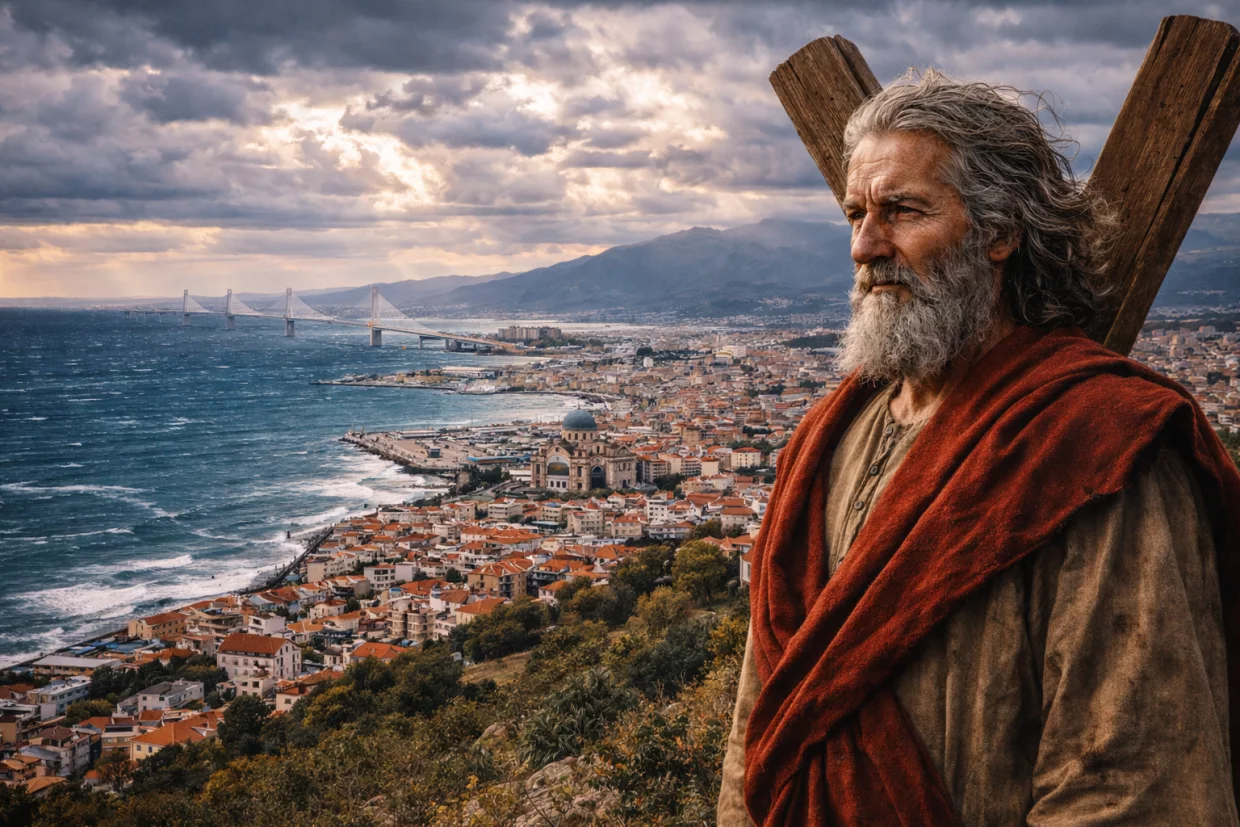
Location and Historical Background
Patras stretches along the northern coast of the Peloponnese in western Greece, facing the Gulf of Patras with mountains rising quietly behind it. The city enjoys sea breezes, wide horizons, and dramatic sunsets, while the nearby Rio–Antirrio Bridge connects it symbolically and physically to mainland Greece. Today, Patras impresses with its lively waterfront, strong student culture, and the feeling of a city that never fully sleeps.
The area has been inhabited since prehistoric times, but Patras rose to prominence in antiquity. During Roman rule, it became one of the most important cities in Greece, especially after 31 BCE, when Emperor Augustus turned it into a Roman colony. A local legend claims the city prospered because every road—and ship—eventually passed through it.
First great blow – Late Roman decline and earthquakes (3rd–6th centuries):
From the 3rd century CE, Patras suffered repeated earthquakes, economic decline, and invasions that weakened Roman urban life. Infrastructure collapsed, population shrank, and the city retreated from its former prominence.
Second great blow – Medieval invasions and instability (9th–14th centuries):
Between the 9th and 14th centuries, Patras faced Slavic raids, Norman attacks, and constant changes in rule between Byzantine, Frankish, and Venetian powers. Each transition brought destruction and rebuilding, preventing long-term stability.
Third great blow – World War II and occupation (1941–1944):
During World War II, Patras was occupied by Axis forces and suffered bombardments due to its strategic port. By 1944, parts of the city were damaged, the population strained, and recovery slow in the post-war years.
Golden Age – Roman prosperity (1st–2nd centuries CE):
Patras’ golden age came under Roman rule, particularly during the 1st and 2nd centuries CE, when it was a wealthy port city connected to major trade routes across the Mediterranean. Grand buildings, roads, and public spaces transformed Patras into a true Roman metropolis.
Why Patras Is Worth Visiting Today
Patras today is energetic, youthful, and refreshingly honest. With one of the largest student populations in Greece, the city has a vibrant café culture, lively nightlife, and a constant flow of ideas and events. It’s not polished like Athens or romantic like island towns—but it feels real.
What truly sets Patras apart is its atmosphere during Carnival season, when the entire city transforms into weeks of parades, costumes, satire, and music. Even outside festival time, Patras offers authentic urban Greece with fewer crowds and lower prices.
Tourist Information and Must-See Places
- Average lunch: €9–13
- Average accommodation (mid-range hotel): €70–110 per night
- One beer: €3.50–5
- One coffee: €3–4
Most interesting areas:
City Center, Waterfront Promenade, Upper Town (Ano Poli)
Patras Carnival
The largest carnival in Greece and one of the biggest in Europe. Taking place mainly in February or March, it defines the city’s identity with parades, masquerades, and unapologetic joy.
Rio–Antirrio Bridge
An engineering landmark connecting the Peloponnese to mainland Greece. It’s especially impressive at night and symbolizes Patras’ role as a connector between regions.
Odeon of Patras
A well-preserved Roman theater dating back to the 1st century CE, still used for performances today. It’s a powerful reminder of the city’s ancient importance.
Final Summary
Patras doesn’t try to impress you with beauty—it wins you over with energy. It’s a city that dances before it explains itself, laughs loudly at history, and keeps one foot firmly on the road ahead. If Greece had a city that perfectly understood the phrase work hard, celebrate harder, Patras would be it.
Tags: Greece • Italy • Mediterranean • War