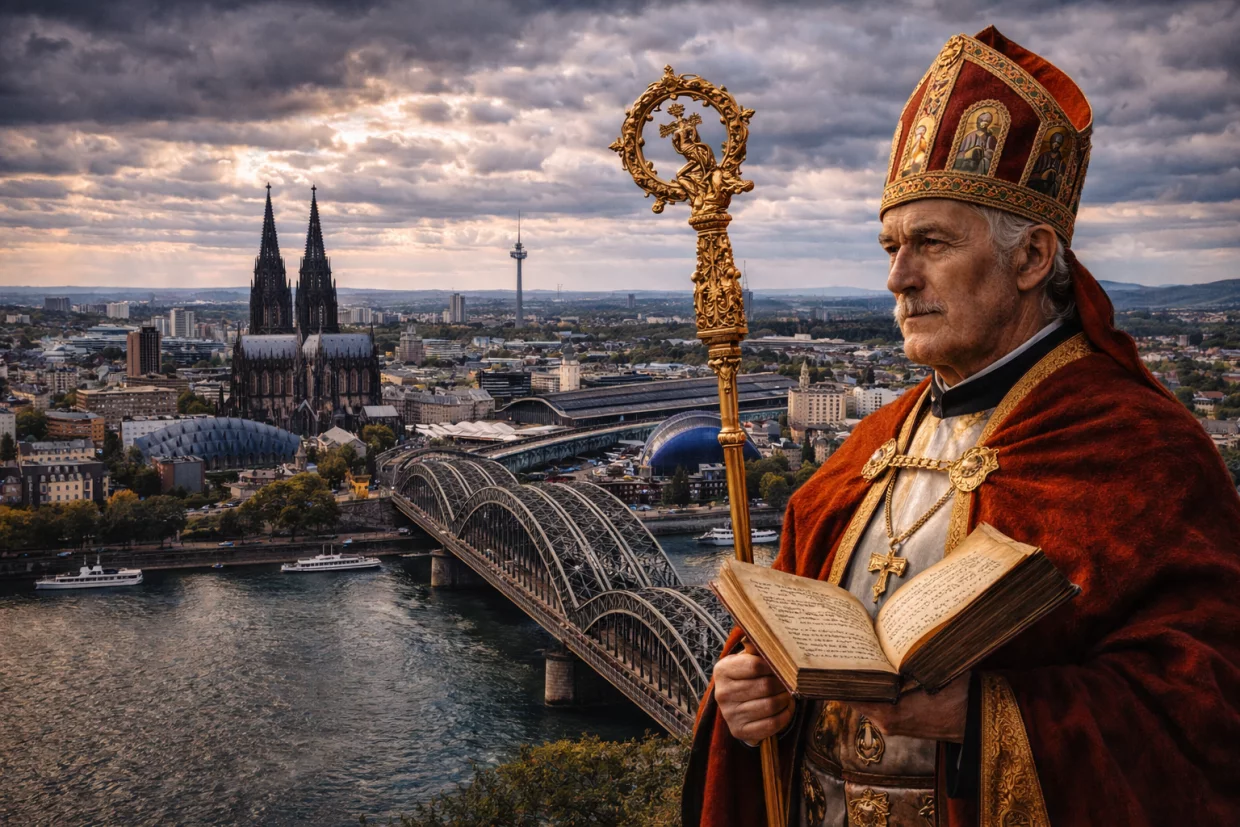
Location and Historical Background
Cologne stretches confidently along the banks of the Rhine River in western Germany, surrounded by flat river plains, gentle hills, vineyards, and one of Europe’s oldest trade corridors. The river defines the city’s rhythm—commercial, cultural, and social. Today, visitors are immediately overwhelmed by the cathedral skyline, lively river promenades, Roman ruins, and a city that feels intensely alive.
Cologne was founded in 38 BCE as a Roman settlement and officially became a Roman colony in 50 CE, making it one of Germany’s oldest cities. Legend has it the Romans chose the spot because even the Rhine slows down here—as if it knew something important was about to happen. Over centuries, Cologne grew into a major religious, commercial, and political center.
The Three Greatest Blows to the City
The Sack and Decline after Roman Rule (5th century)
With the collapse of Roman authority around 455 CE, Cologne suffered invasions, population loss, and economic decline. Infrastructure deteriorated, trade slowed, and the city had to reinvent itself in a fragmented medieval world.
World War II Bombing (1942–1945)
Cologne was one of the most heavily bombed cities in Germany. By 1945, over 90% of the old city was destroyed. Entire neighborhoods vanished, and the population collapsed. The survival of the cathedral amid the ruins became a powerful symbol of endurance.
Post-War Reconstruction and Identity Loss (1950s–1960s)
Rapid reconstruction prioritized speed over beauty. While the city recovered economically, much of its historic urban fabric was lost forever—leaving Cologne with a reputation for charm rather than classical beauty.
The Golden Age of Cologne
Cologne’s golden age spanned the High Middle Ages (12th–15th centuries), when it was one of the largest and richest cities north of the Alps. As a free imperial city and major pilgrimage destination, Cologne prospered through trade, religion, and craftsmanship. Construction of Cologne Cathedral began in 1248, reflecting the city’s enormous ambition.
Why Cologne Is Worth Visiting Today
Modern Cologne is open, diverse, and culturally fearless. It offers world-class museums, a legendary carnival, vibrant LGBTQ+ culture, riverside life, and an atmosphere that feels human rather than monumental. The city may not be conventionally beautiful, but it is deeply lovable.
In summary, Cologne is not about appearances—it’s about spirit. It welcomes visitors like old friends and invites them to join the celebration.
Tourist Information and Must-See Sights
Estimated Prices
- Average lunch: €12–16
- Mid-range hotel (per night): €90–150
- One beer (0.5 l Kölsch): €4–5
- One coffee: €3–4
The most visitor-friendly areas include the Old Town, riverside promenades, Belgian Quarter, and Ehrenfeld.
Must-Visit Places
Cologne Cathedral
A UNESCO-listed masterpiece and Germany’s most visited landmark, dominating the skyline and embodying the city’s identity.
Old Town Cologne
A lively riverside district filled with pubs, narrow streets, Roman remains, and everyday Cologne life.
Museum Ludwig
One of Europe’s leading modern art museums, featuring works by Picasso, Warhol, and contemporary masters.
Final Summary
Cologne doesn’t try to be pretty—it tries to be real. Come for the cathedral, stay for the people, and leave knowing that some cities win hearts not with perfection, but with personality.